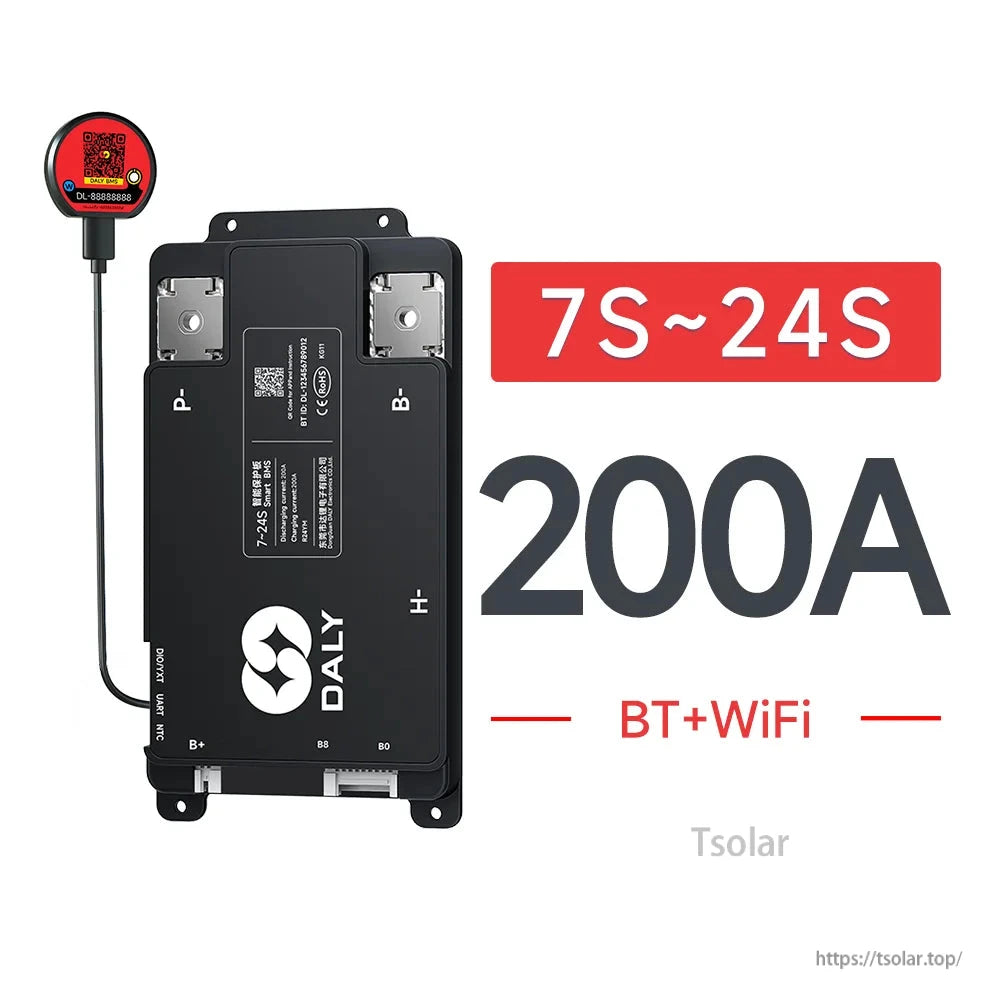
Overview
DALY SMART BMS (Y-series, Mini-Black BMS) is a smart battery management system with built-in Bluetooth, designed for Li-ion, LiFePO4, and LTO battery packs. It supports a wide string range (4S to 24S, depending on battery type) and multiple current options from 30A to 200A. Through the Bluetooth smart APP, battery data can be monitored in real time, and parameters can be viewed/set.
Key Features
- Model family: DALY SMART BMS Y-series: 30-60A (YH), 80-120A (YK), 150-200A (YM)
- Optional strings range (general): 4S-8S / 7S-17S / 7S-24S
- Optional current range: 30A / 40A / 60A / 80A / 100A / 120A / 150A / 200A
- Built-in Bluetooth: Connect to the APP to monitor battery data in real time; APP can view & set battery parameters and monitor battery information like voltage, current, charge and discharge status and alert, etc.
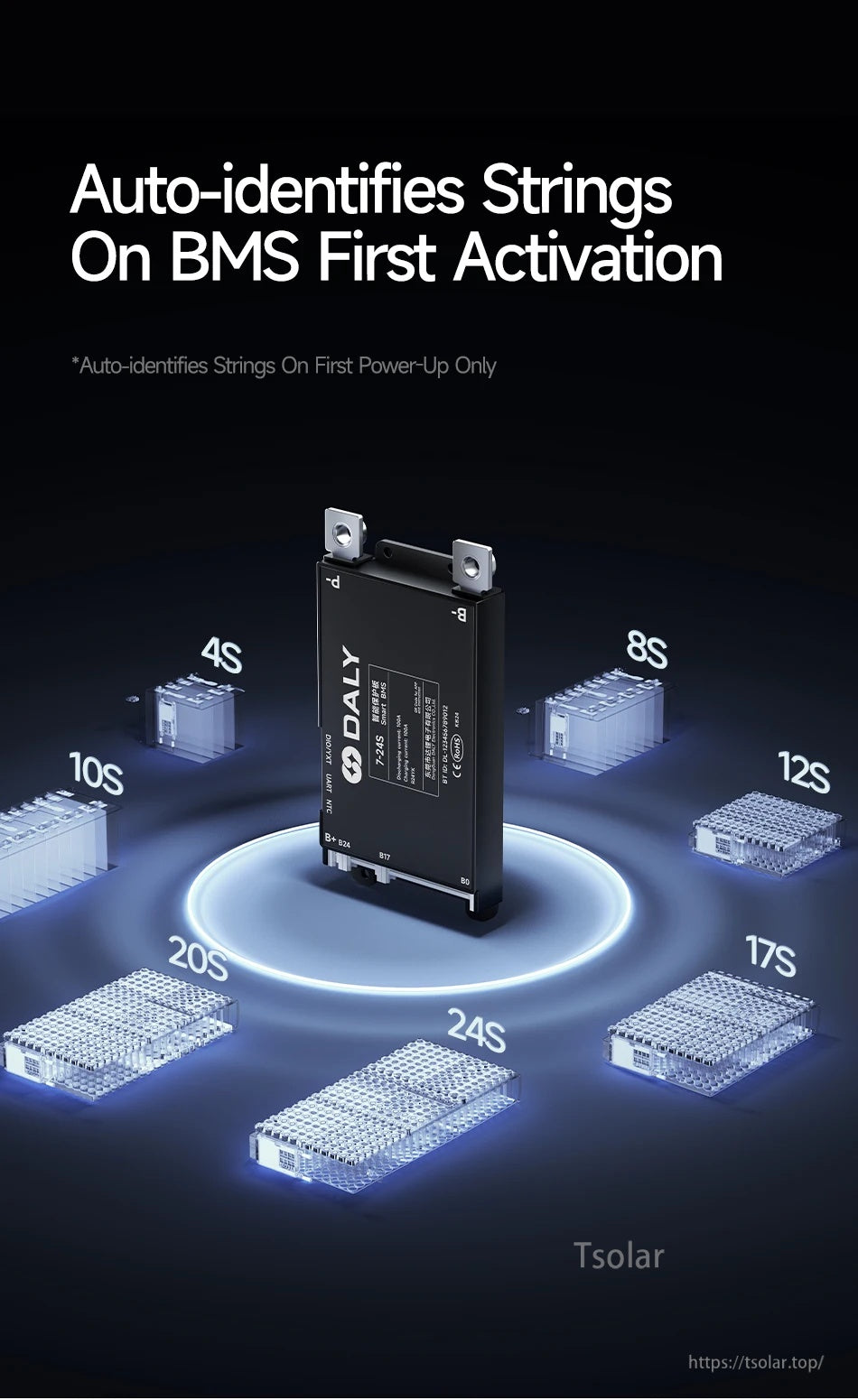
- Auto-identifies PACKs strings: auto-identifies strings on first power-up only
- Parallel use: “PACKs Any Parallel” (as stated)
- Component design (as stated): precise and fast IC; low resistance, high withstand voltage MOSFET
- Thermal silica: accelerates heat dissipation
- Preset interface / buckle cable: for more convenient connection
- Communication and expansion (as stated): multi-channel communication and multi-dimensional expansion; expandable for display, WiFi module, etc.
- Customizable communication: RS485 connect to inverter (customized); RS485 connect to EV controller (customized)
- Professional high current resistance (as stated): curated components; strong overcurrent; low temperature rise; quality guaranteed
For function/parameter/logo customization and accessory matching, contact customer service at https://tsolar.top/ or service@tsolar.top.
Specifications
| Series | DALY SMART BMS, Y-series (Mini-Black BMS) |
| Models (by current range) | YH (30-60A); YK (80-120A); YM (150-200A) |
| Optional current range | 30A / 40A / 60A / 80A / 100A / 120A / 150A / 200A |
| Battery type | Li-ion / LiFePO4 / LTO |
| String number range (by battery type) |
Li-ion: 4-8S / 7-17S / 7-20S LiFePO4: 4-8S / 8-17S / 8-24S LTO: 6-8S / 10-17S / 10-24S |
| Charging voltage (as stated) | N x 4.2V (Li-ion); N x 3.2V (LiFePO4); N x 2.4V (LTO) |
| Size (by model) |
YH: 101*65.5*14.2mm YK: 130*65.5*14.2mm YM: 180*92.4*17.2mm |
| B- / P- (by model) |
YH: 10AWG 100mm YK: 7AWG 150mm (80A/100A); 6AWG 150mm (120A) YM: 2AWG 200mm |
| Cable length (as stated) |
YH: 4-8S: 450mm; 7-17 / 7-24S: 550mm YK: 550mm YM: 550mm |
| Dimensional tolerance | ±0.5mm |
| Operating temperature | -40~85°C |
| Working power | ≤10mA |
| Sleep current | <600uA |
| Sleep time | 3600S |
| NCT | *1 (2 ways) |
| Passive balance current | 100±30mA |
| Cell sampling voltage | 1.5~4.9V |
| Standard communication | Uart |
| Customizable communication | RS485, SIF |
| Parallel current limiting | Integrated 1A parallel current limiting module |
| PC Master | Support Windows system |
| Bluetooth | Built-in Bluetooth. Support Android/iOS/HarmonyOS |
| Expandable accessories (as stated) | Display screen, WiFi module, GPS module, parallel module, buzzer, heating module, key switch, etc. |
Basic Functions (Protection)
- Over-charging protection
- Over-discharging protection
- Over-current protection
- Temperature protection
- Disconnect protection
- Short circuit protection
- Balance function
- Short circuit protection recover
- Additional protection items shown: pre-charge, high temperature, low temperature, static electricity, offline
Passive Equalization
- Balanced Start Voltage: 3.4V
- Balanced Opening Voltage Difference: ≥20mV
- Balance Current: 100±30mV
- Balanced start conditions (both required): (1) Reach the set balanced start voltage; (2) The highest voltage reaches the set balanced start voltage difference.
What’s Included
- BMS x 1 pcs
- Sampling cable x 1 pcs
- Temperature probe (NTC) x 1 pcs
- B+ cable x 1 pcs
- English manual x 1 pcs
- USB-Uart cable x 1 pcs
Optional Accessories
- UART to USB cable
- Battery Capacity Indicator
- Touch screen LCD
Customization (Options Shown)
- Soft switch
- Key switch
- RS485 and CAN Communication
- DO/I port for special needs
Optional accessories and customized accessories must match the BMS model and be purchased at the same time.
Applications
- RV energy storage
- Photovoltaic energy storage
- Home and outdoor energy storage
- Electric vehicles
- Tricycles
- Forklifts
- Tourist vehicles
- Golf cart
Installation Notes (Balance Cable Connection)
Preparation
- Find the total positive and total negative of the battery pack.
- Find B-/P- of BMS.
- Insert temperature probe (NTC) into the BMS.
Welding
- Note: When soldering, the balance cable cannot be inserted into the BMS.
- (1) Weld sampling cables: Start from thin black wire to B- (total negative), then connect each cell's positive in order. Last red wire to B+ (total positive). Note: Do NOT plug into BMS during welding. Insulate unused wires.
- (2) Check voltages: Use multimeter or wire tester to confirm each cell's voltage is normal. Fix any miswiring or poor soldering.
- (3) Weld output wires: Secure B- and P- to BMS with 10N·m torque; weld B- to battery negative. Note: Insulate P- before final connection.
- (4) Plug NTC and sampling cable: Insert NTC, then plug sampling cable to auto-activate BMS.
Voltage Measurement
- Measure whether the battery voltage (B+ → B-) is consistent with the output voltage of the BMS (B+ P-).
- If the two voltage values are equal, it means that the BMS is working normally.
How to Choose the Right BMS (Selection Notes)
- Battery type matching: BMS type and lithium battery type must be in one-to-one correspondence (Li-ion/LiFePO4). Mismatch consequences: (1) BMS damaged, even BMS and battery burn out; (2) The battery cannot be fully charged and discharged.
- String count matching: BMS strings and battery strings must be in one-to-one correspondence. Mismatch consequence: BMS and battery burn out.
- Selection method (formula shown): load maximum power ÷ (string number of battery × overdischarge voltage) × coefficient
- Depending on the battery usage scenario, the coefficient value is different.
Details

Backed by long-term R&D investment and a mature quality system for consistent pack protection.

International certification marks and factory-direct supply support dependable sourcing for projects and OEM builds.
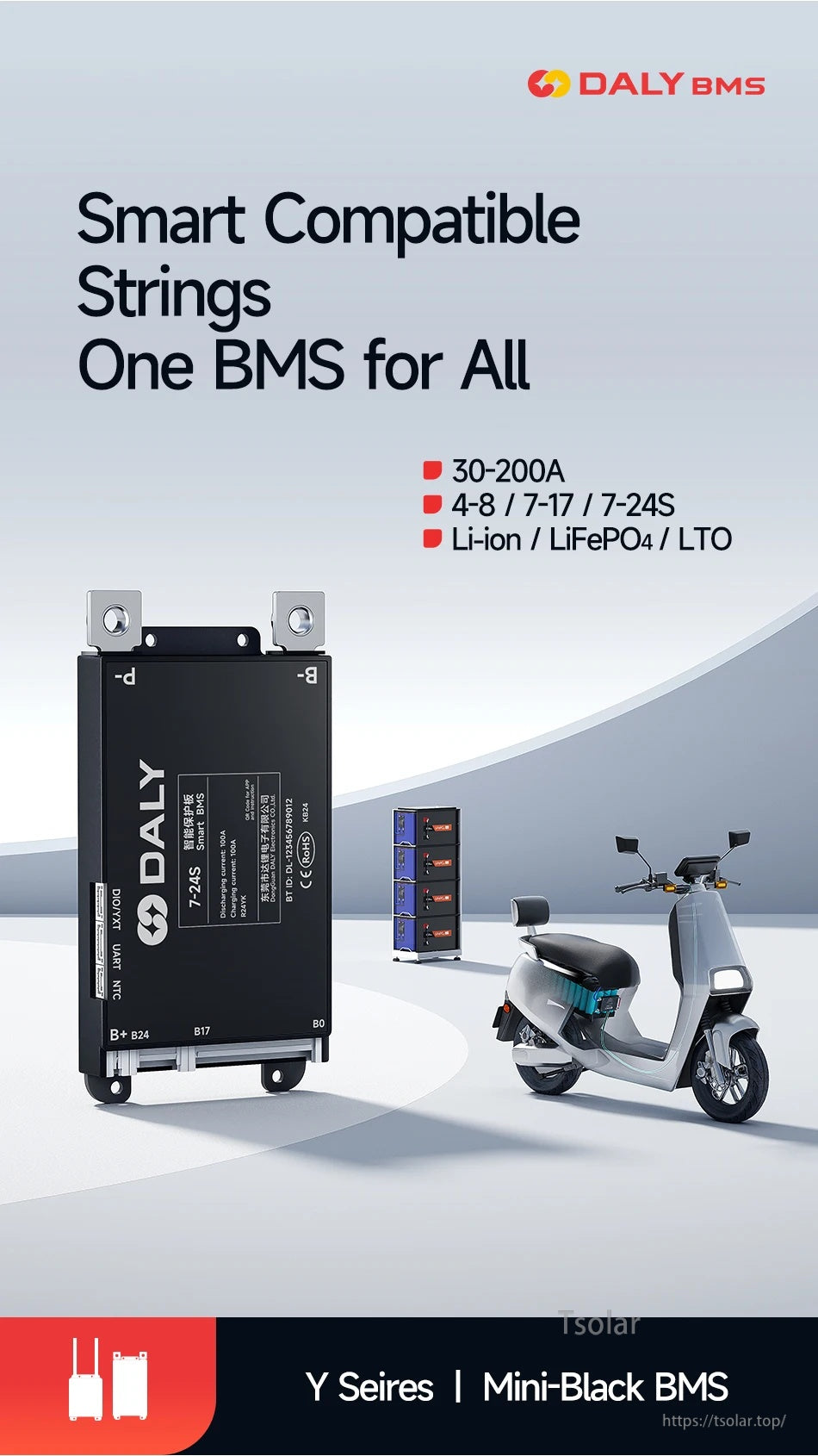
The Y‑series Mini‑Black lineup covers broad current options and multiple string ranges for Li‑ion, LiFePO4, and LTO packs.
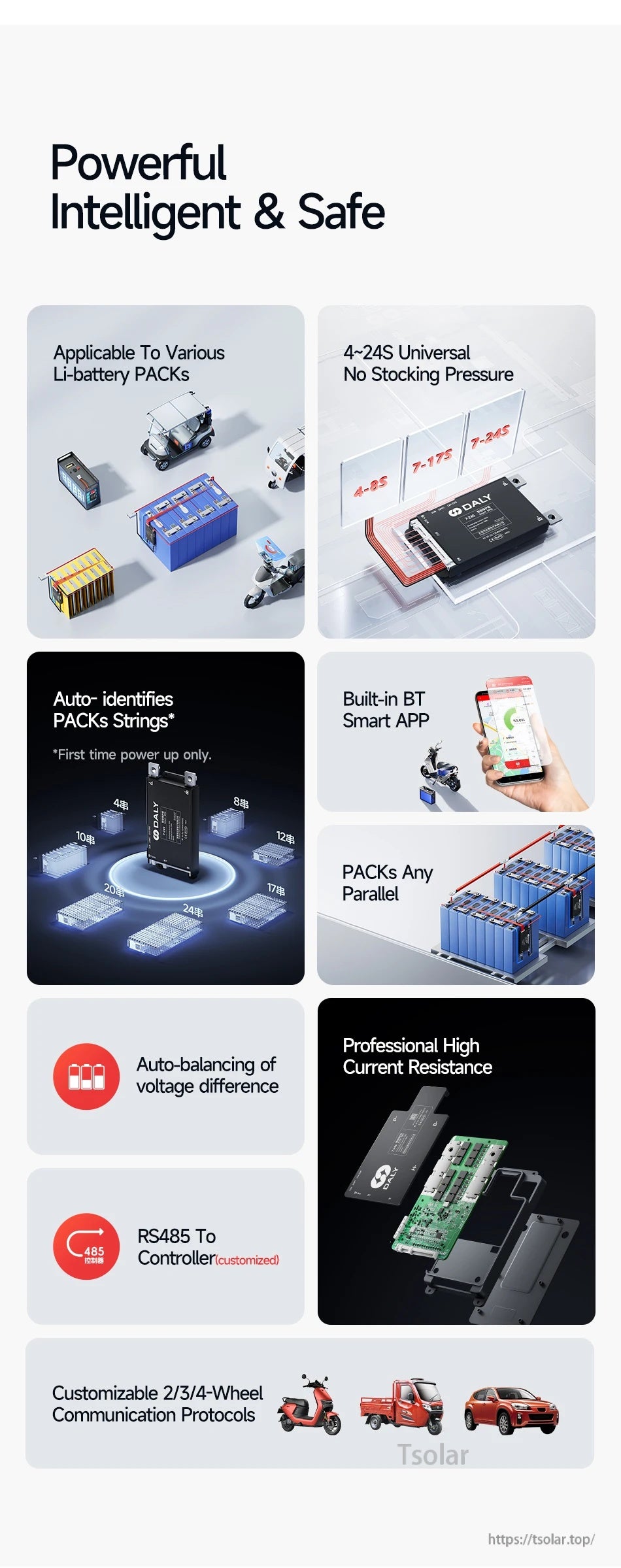
Bluetooth monitoring, first-activation string auto-detect, and parallel-ready pack support help simplify system integration.
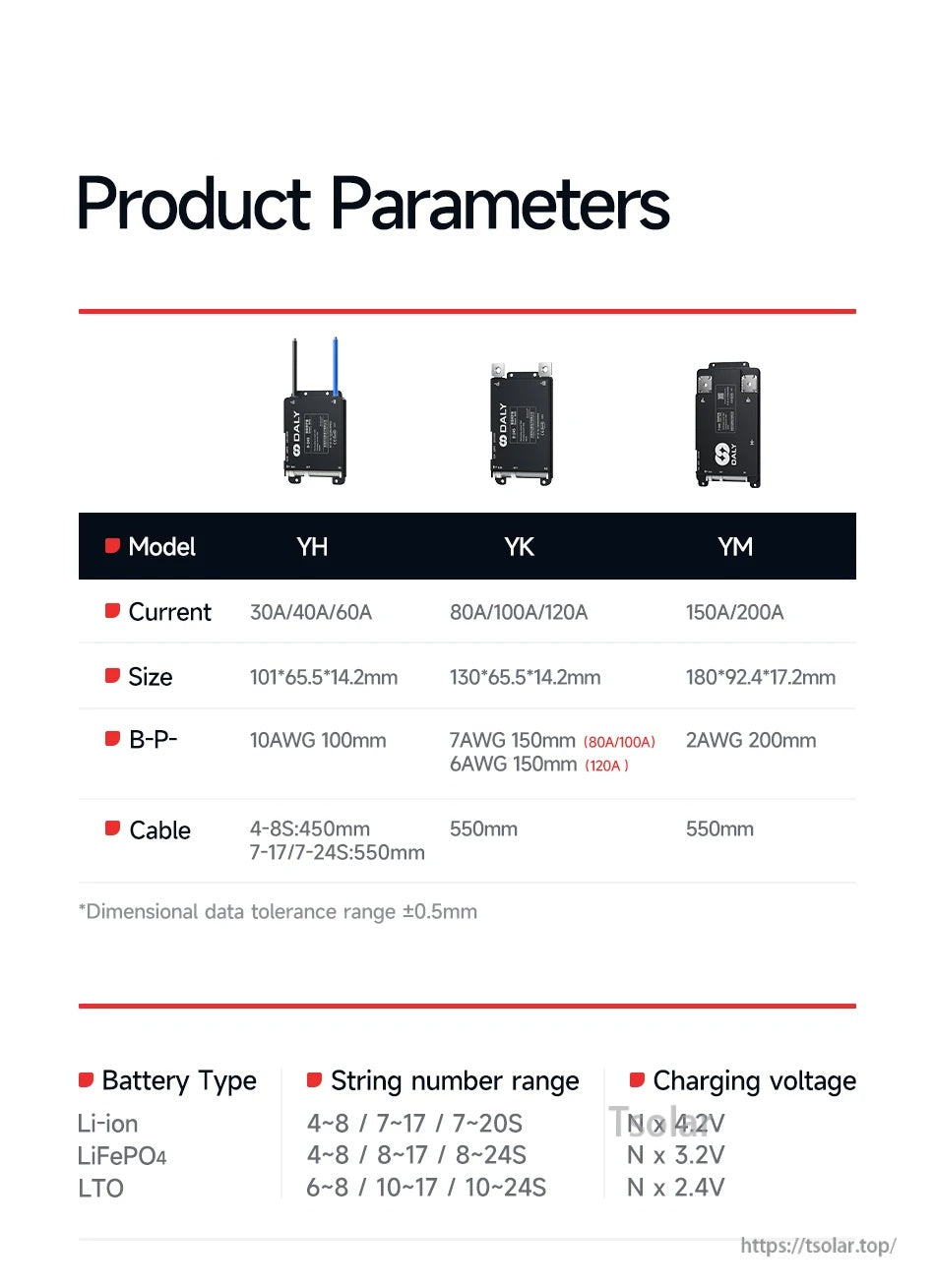
Choose YH/YK/YM by current rating and form factor, with wiring and harness lengths listed for quicker planning.
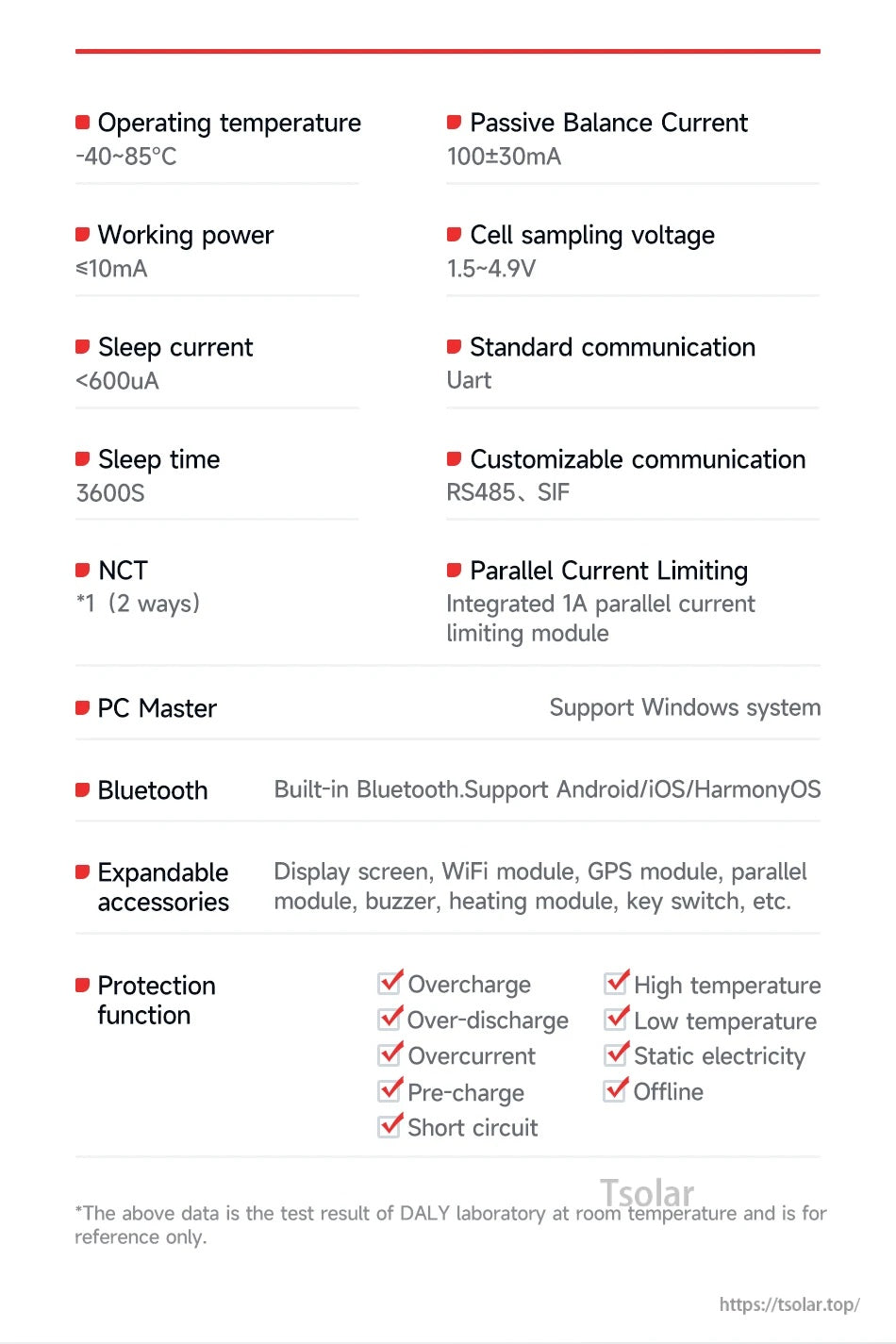
Core operating specs, communications, and protection functions are summarized for fast compatibility checks.
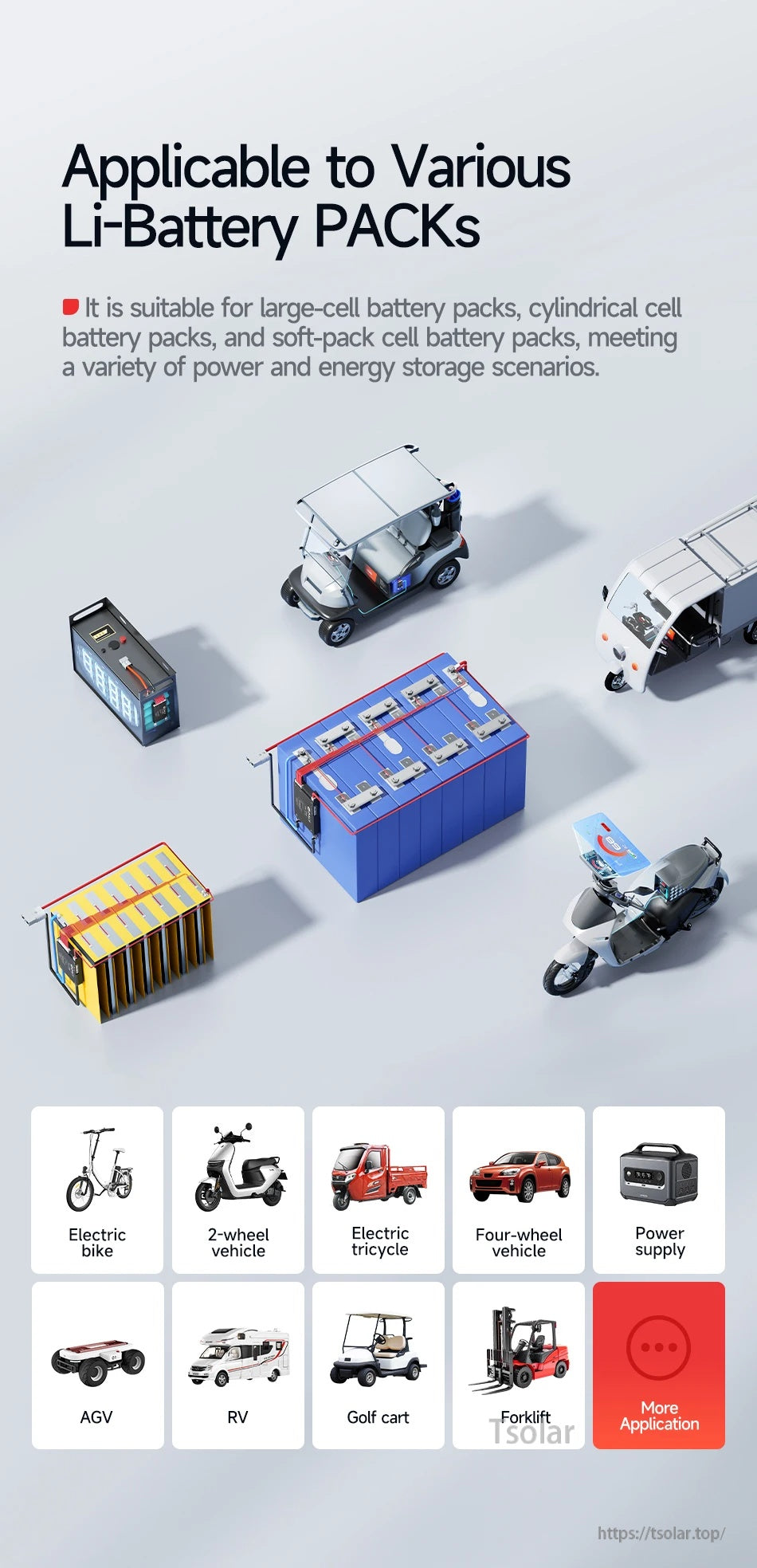
Suitable for a wide range of lithium battery pack formats across mobility, industrial, and energy storage applications.

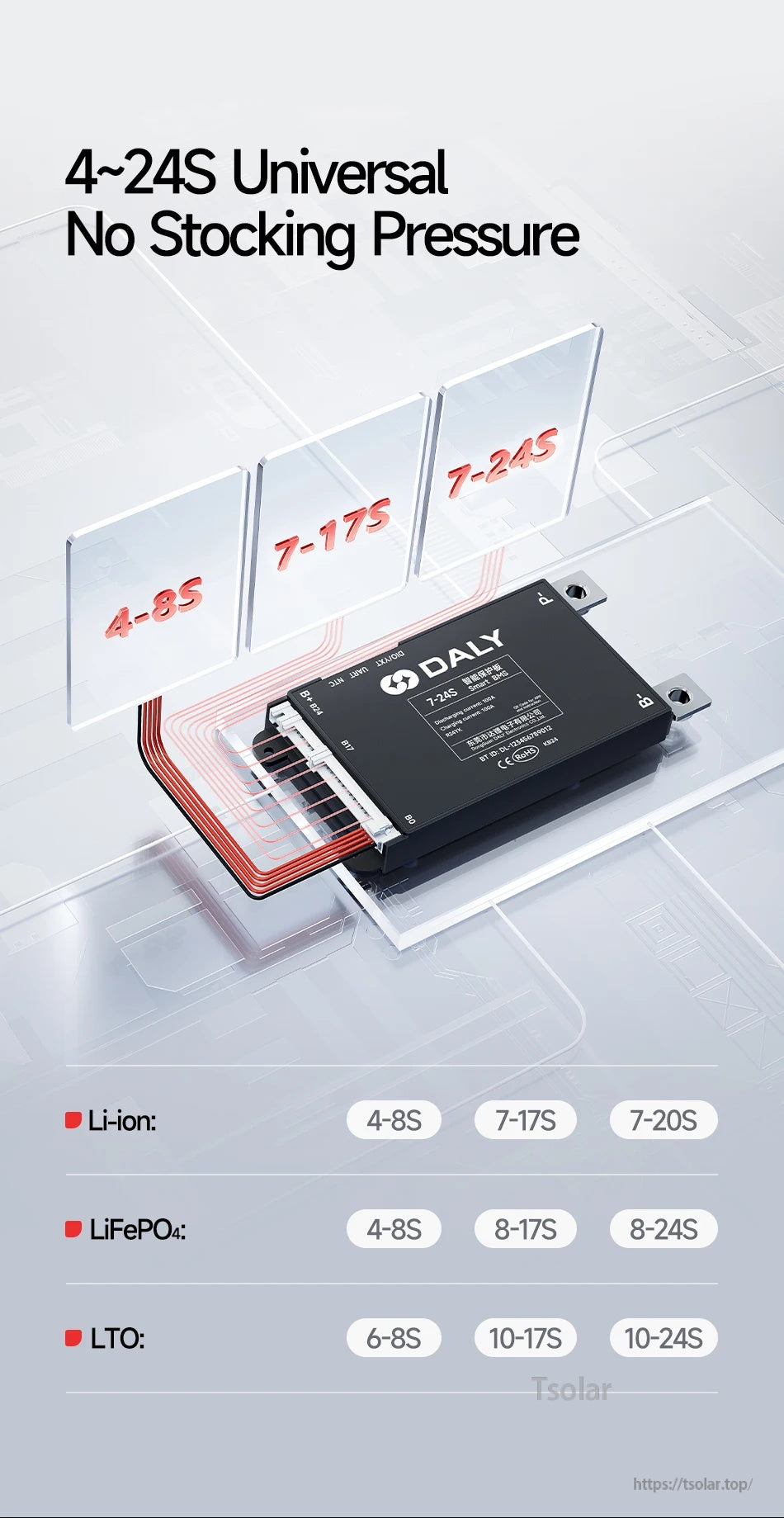
Select the correct string range for your chemistry—Li‑ion, LiFePO4, or LTO—across setups up to 24S.
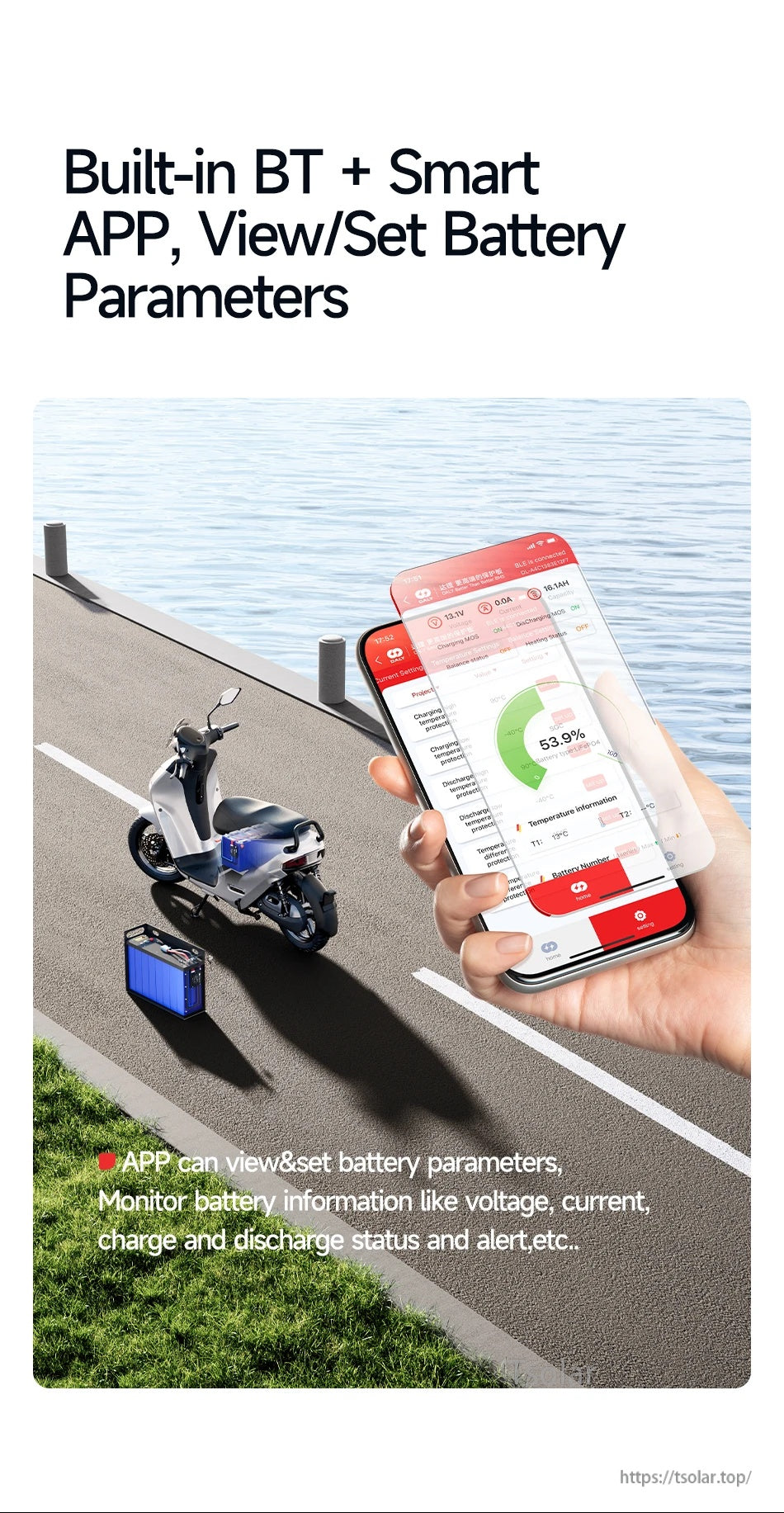
Real-time data and parameter settings are available in the smart app via built‑in Bluetooth.
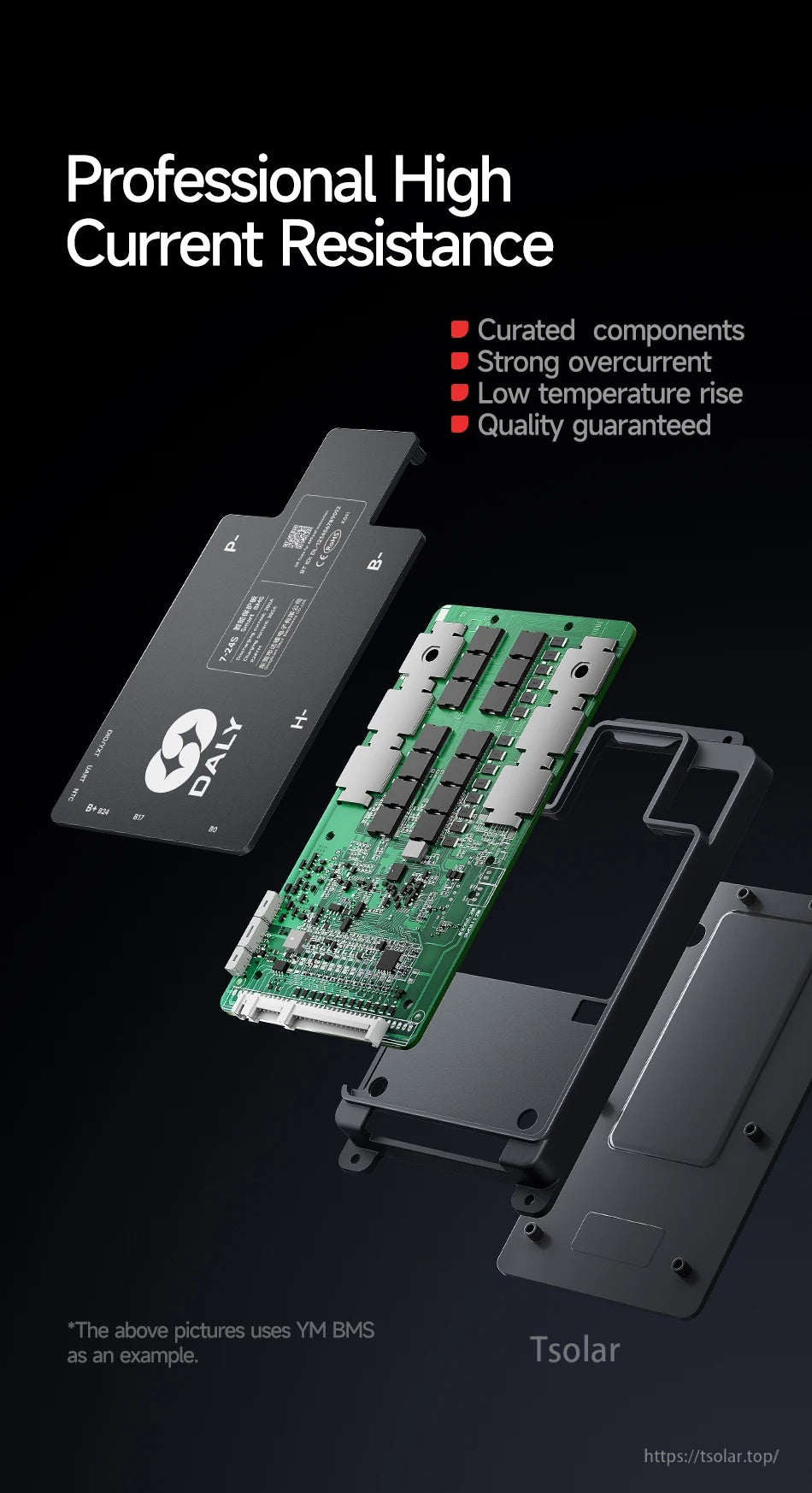
High-current hardware design emphasizes low temperature rise and strong overcurrent capability (YM model illustrated).
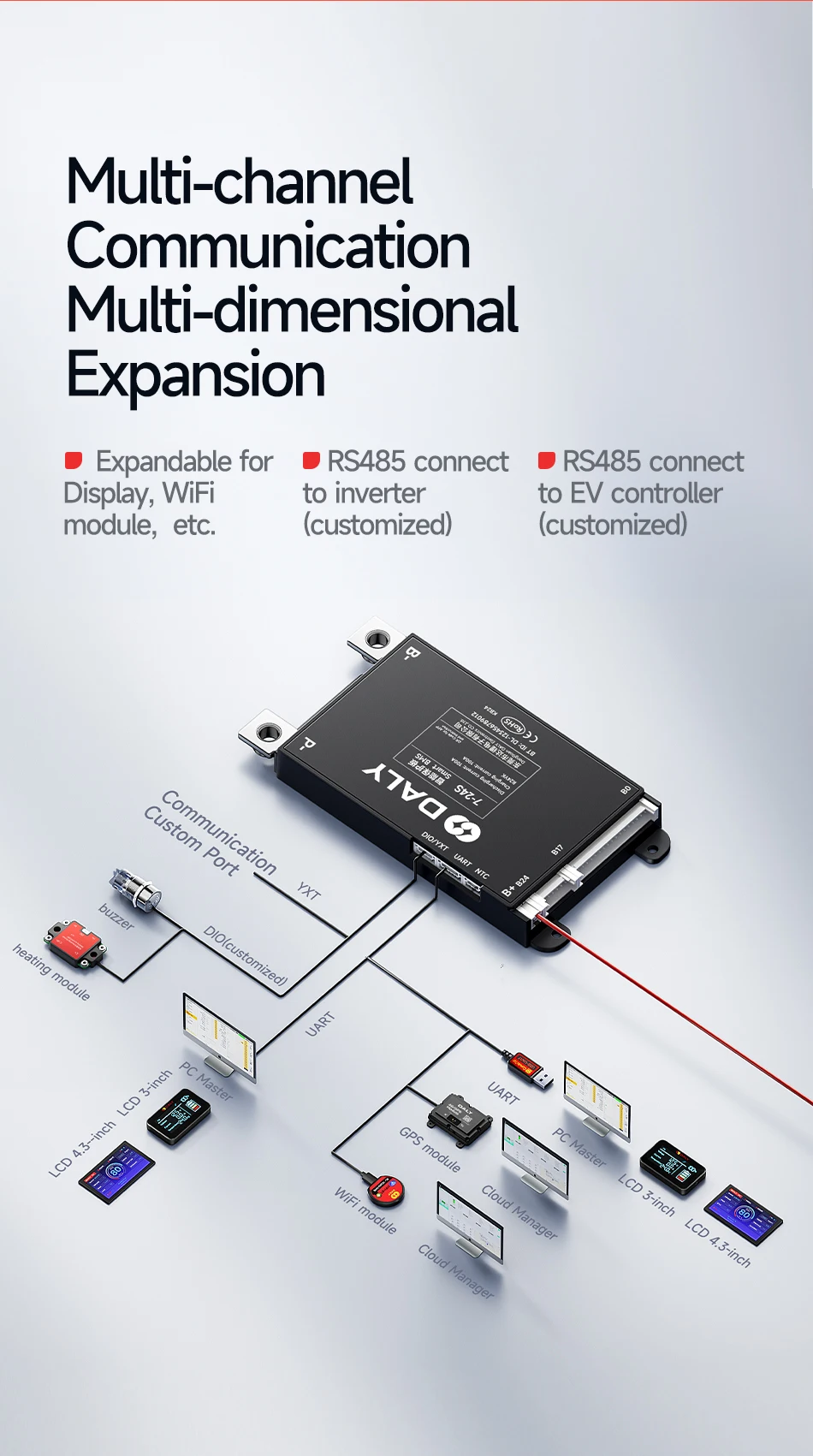
Expand the system with display and communication options, including UART and customized RS485 connections.
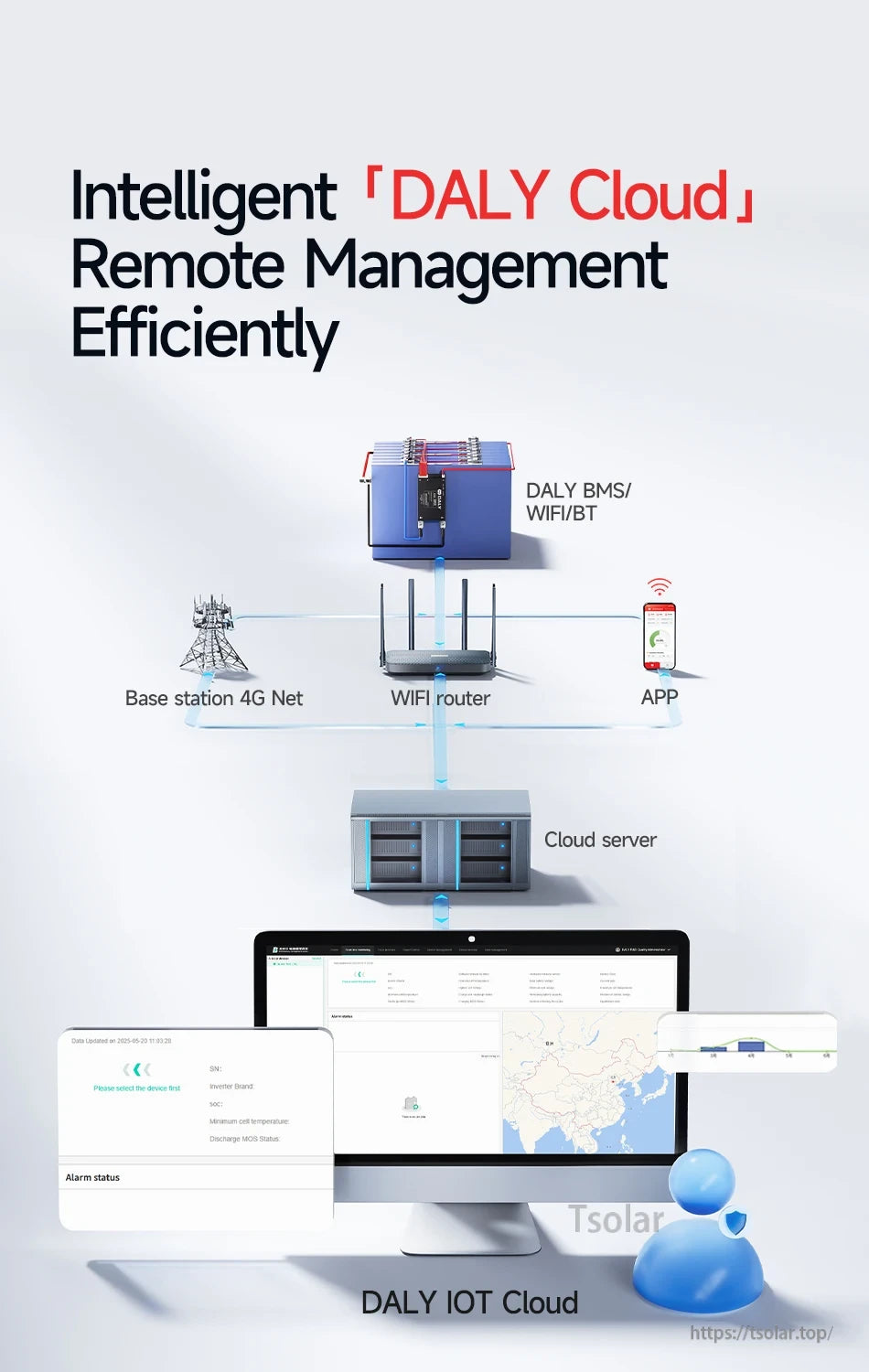
Optional cloud connectivity supports remote monitoring and management workflows when paired with a WiFi solution.
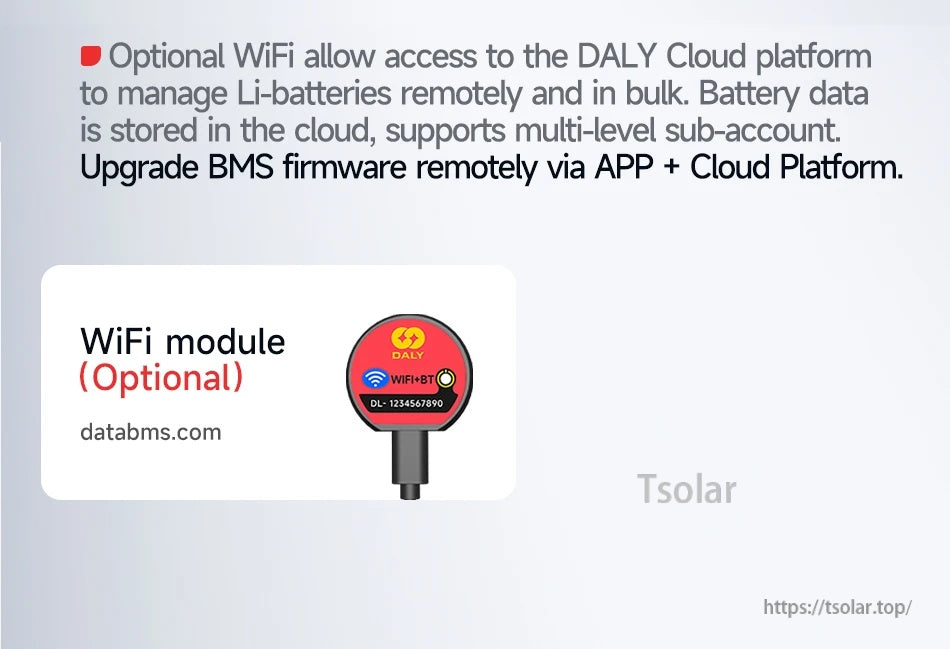
Add the optional WiFi module to enable cloud-based data access and remote firmware upgrades via app and platform.
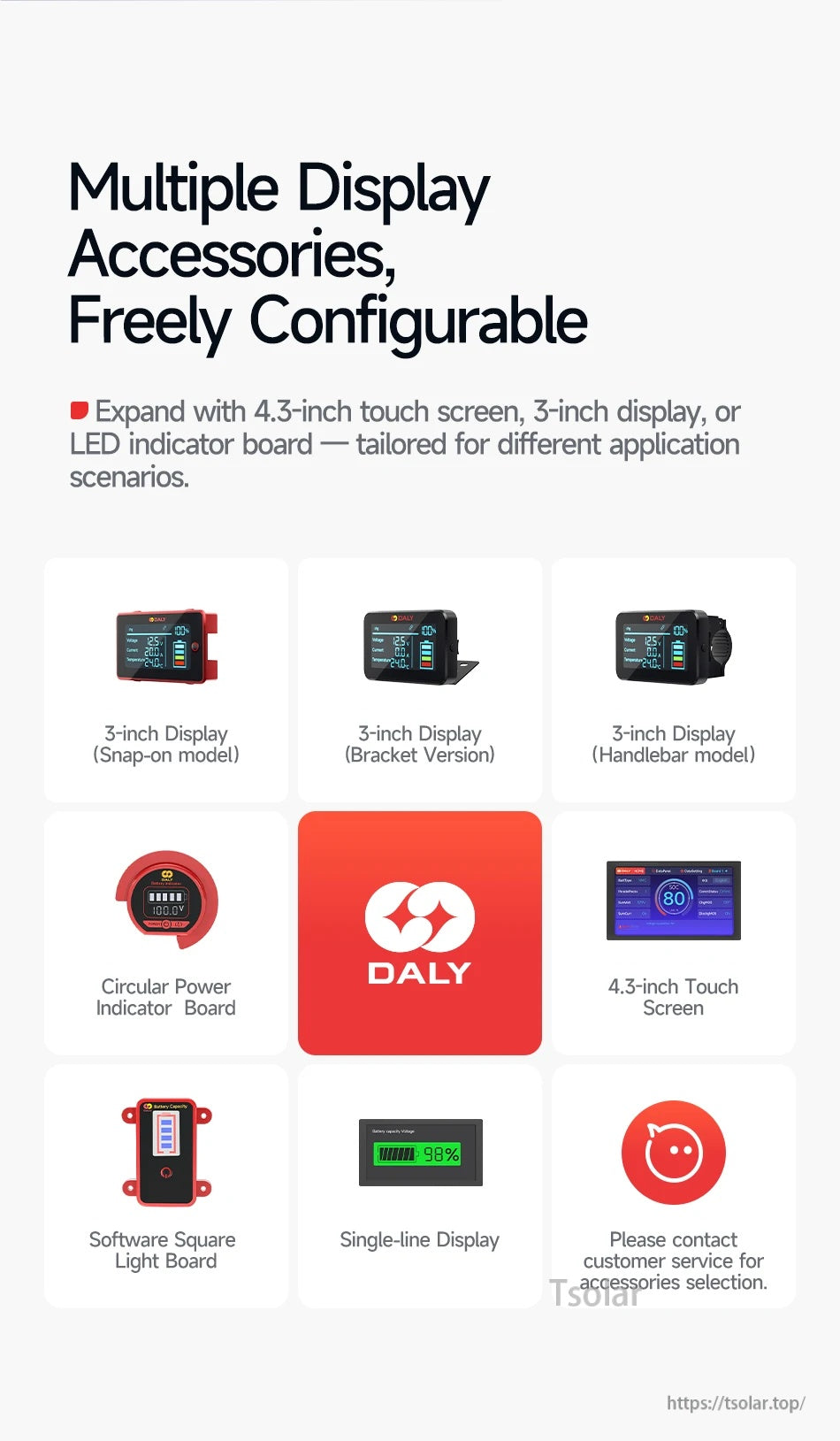
Multiple display accessories are available, from compact indicators to a larger touch screen for detailed pack readouts.