Overview
The POWLSOJX MPPT solar charge controller is designed for solar systems using 12V/24V/36V/48V batteries (auto identification) and supports lead-acid battery types (Seal, GEL, Flooded) as well as LiFePO4. It features an LCD with backlight for operating data/status display and includes dual USB 5V charging ports.
Key Features
- MPPT maximum power point tracking; tracking efficiency is no less than 99.5%.
- LCD dynamically displays operation data and working status; backlight display.
- Compatible with Seal, GEL, Flooded, and LiFePO4 battery charging.
- Dual USB 5V charging ports.
- 12V/24V/36V/48V automatic identification.
- Protections listed: over-voltage, over-current, over temperature; plus short circuit protection, open circuit protection, overload protection, over-discharge protection, lightning protection, reverse protection, temperature protection.
- 7 working mode selection and parameter display (working mode, battery voltage, PV charging current, battery discharging current, product working temperature, delay time).
- Some controller parameters can be modified by the user to set and save.
For pre-purchase configuration help, contact https://tsolar.top/ or service@tsolar.top.
Specifications
| Brand | POWLSOJX |
|---|---|
| Product Type | MPPT solar charge controller |
| Maximum Current | 100A (also referenced: 60A/80A/100A series) |
| Charging Current | 60-100A |
| Battery Voltage | 12V/24V/36V/48V Auto |
| Max Solar Input (Voc) | 15-25V (12V Battery); 30-50V (24V Battery); 45-75V (36V Battery); 60-100V (48V Battery) |
| Maximum PV Input Power (listed) | 720W (12V Battery); 1440W (24V Battery); 2160W (36V Battery); 2880W (48V Battery) |
| Max Input Power (listed) | 1200W (for 12V system); 2400W (for 24V system); 3600W (for 36V system); 4800W (for 48V system) |
| Input Voltage Range (listed) | 13.0V-14.8V (for 12V system); 26.0V-29.6V (for 24V system); 39.0V-44.8V (for 36V system); 52.0V-59.2V (for 48V system) |
| Recommended Solar Panel Voltage for Charging (listed) | 15-23V (charge 12V battery); 30-46V (charge 24V battery); 45-66V (charge 36V battery); 60-90V (charge 48V battery) |
| USB Output | Dual USB 5V charging ports |
| Battery Types (listed) | Seal / GEL / Flooded / LiFePO4 |
| Certification | CE, FCC |
| Is Smart Device | No |
| High-concerned Chemical | None |
| Origin | Mainland China |
| Application (listed) | Thermal Controller, Solar System Controller, Solar Working Station |
| Warranty (listed) | 12 month warranty |
Note: Product materials list more than one maximum input power set. Maximum PV input power can vary by version and system configuration; confirm the required model and limits before installation.
Working Modes (listed)
- 1. Charging mode: in any case, never discharge.
- 2. Light control mode: when nights are detected, delay 10 minutes then start to discharge; when daytime is detected, delay 10 minutes then stop discharging.
- 3. Light and time delay control mode: when nights are detected, delay 10 minutes then start to discharge and count down; discharge stops when timer reaches 00:00. Longest duration is 23:59.
- 4. Universal control mode: under trouble-free condition, always keeps discharging.
- 5. Manual control mode: uses “▼” for discharging on/off.
- 6. Timing control mode: opens or closes the discharge regularly.
- 7. Test mode: same as light and time delay control mode but without the 10-minute delay.
Additional listed behavior: the controller can continue discharging under low voltage protection by touch-holding “▼” for 5 seconds; discharge is then only stopped by hand. This may damage the battery if used improperly.
Installation Notes & Precautions (listed)
- Correct installation sequence: (1) Battery --> (2) Solar panels --> (3) DC load.
- To correctly identify battery voltage during first wiring: 12V battery voltage higher than 10V; 24V battery higher than 20V; 36V battery higher than 30V; 48V battery higher than 42V.
- Do not charge 12V batteries with 24V/36V/48V solar panels; excessive difference may cause overheating and damage.
- Install the controller as close to the battery as possible to reduce voltage drop caused by long wires.
- Use only photovoltaic panels as the charging source; do not use DC or other power supply as the charging source.
- The controller will generate heat when running; install on a flat, well-ventilated surface.
- Listed battery note: suitable for lithium batteries and various lead-acid batteries; lithium batteries require manual adjustment of overcharging voltage. Do not use other batteries (e.g., nickel metal hydride batteries).
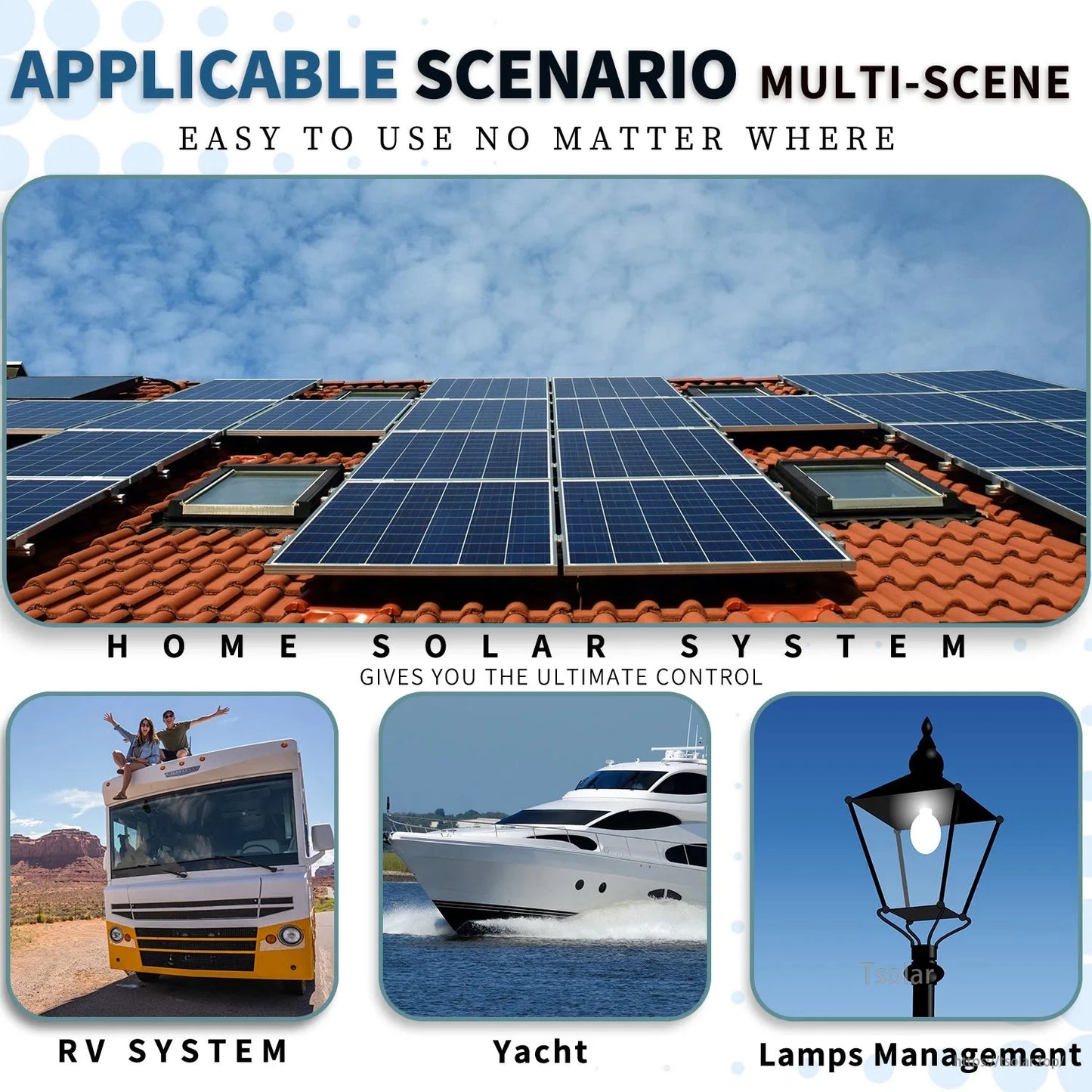
Applications
- Communication base station
- Home power supply system / home solar system
- Traffic light
- Solar street lamp / street light
- Courtyard lamp systems / lamps management
- RV system
- Yacht
Troubleshooting (listed)
| Malfunction phenomenon | May cause | Troubleshooting method |
|---|---|---|
| Sunshine is sufficient but not charging | Photovoltaic board open circuit or reverse connection | Re-link good photovoltaic panels |
| The load logo does not light up | Mode setting error / The battery voltage is too low | Re-set / Recharge |
| Load mark flashes slowly | Load overcurrent | Reduce load power |
| Load logo flashes quickly | Short circuit protection | Remove short circuit, automatically recover |
| The controller does not light up | The battery voltage is too low / reverse connection | Replace the battery / check reverse connection |
Details

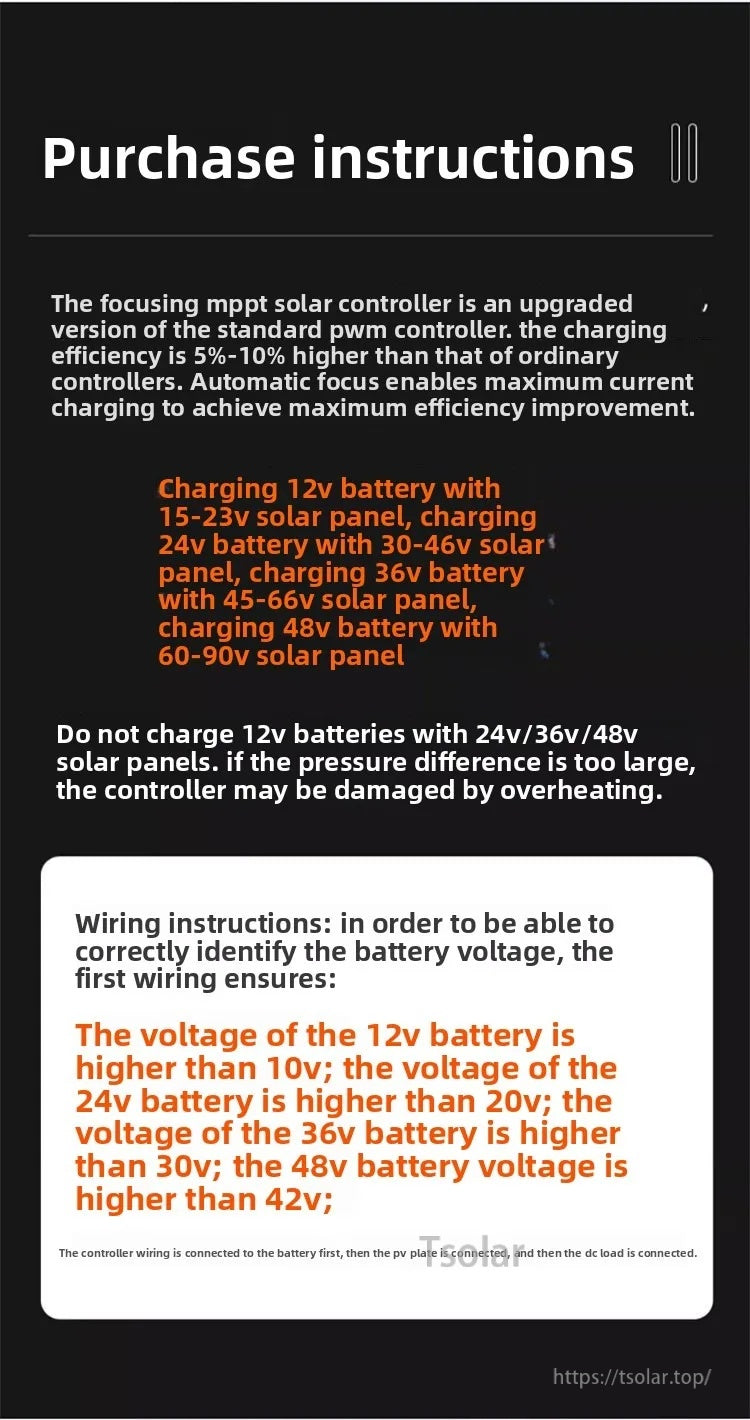
Use the recommended panel voltage ranges for your battery system to keep charging stable and efficient.
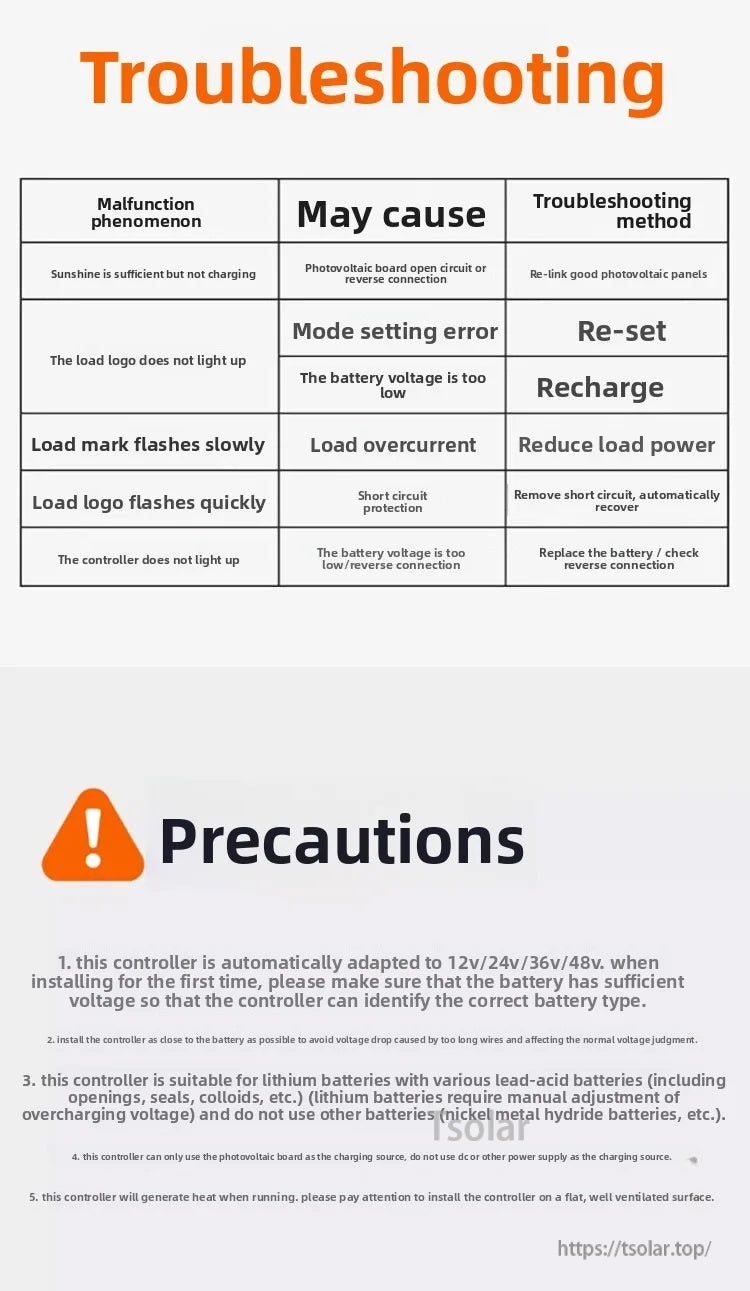
Quick troubleshooting steps and key precautions help simplify setup and day-to-day operation.

POWLSOJX MPPT Solar Charge Controller supports 12V/24V/36V/48V battery systems with an easy-to-read backlit LCD.
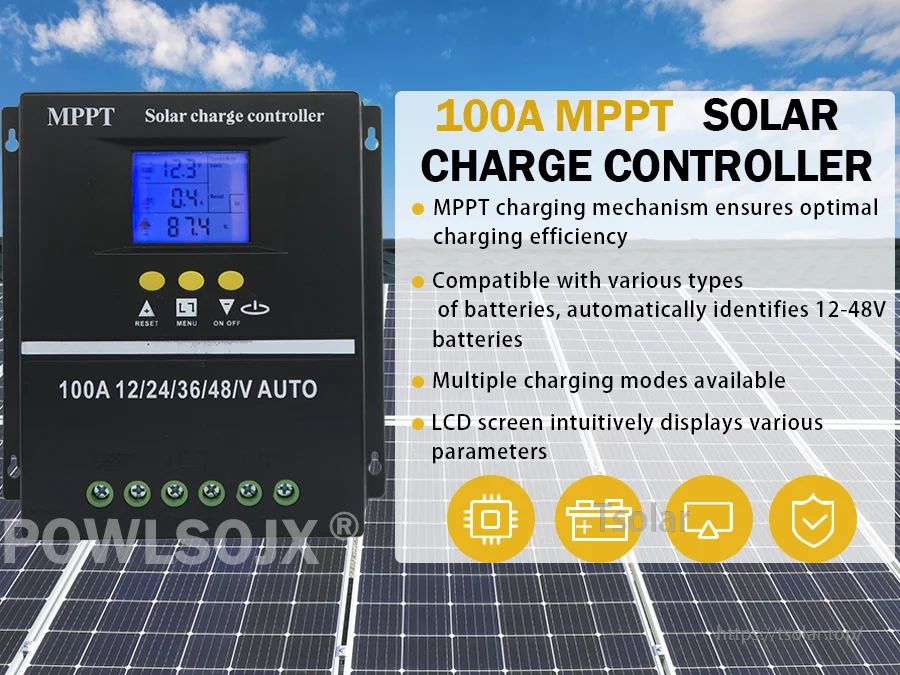
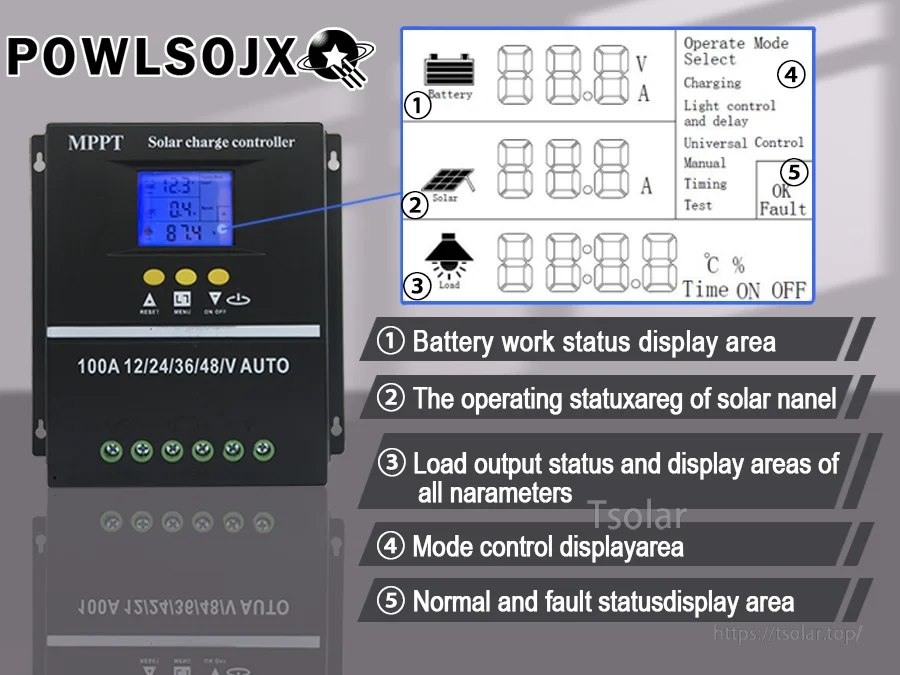
The LCD groups battery, PV, and load data with clear mode and fault indicators for faster monitoring.

Follow the recommended connection order—battery first, then solar panels, then DC load—for correct auto-identification.
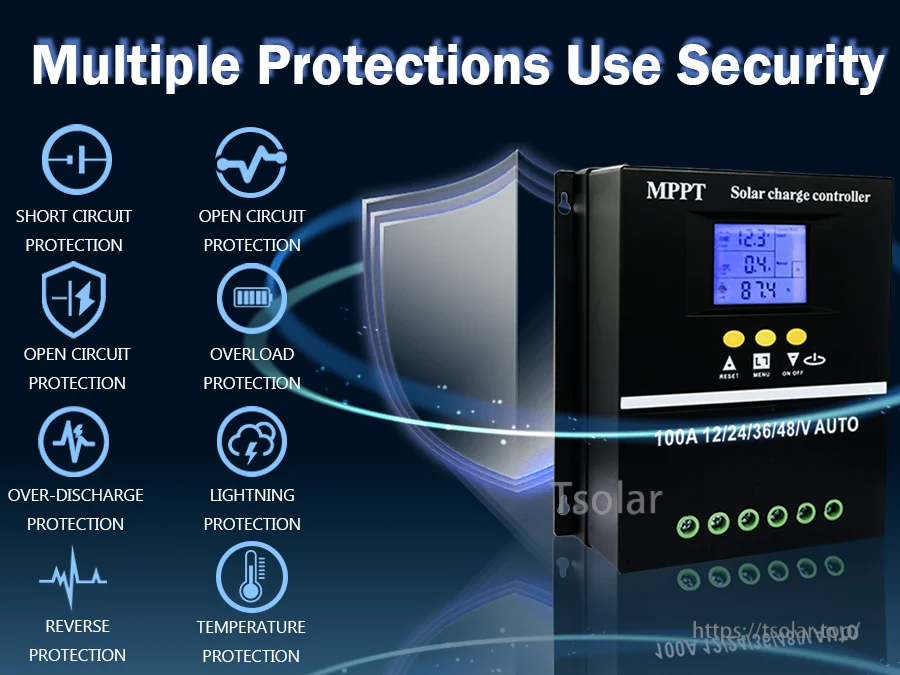

Charging profiles support common lead-acid types and LiFePO4 for flexible system builds.
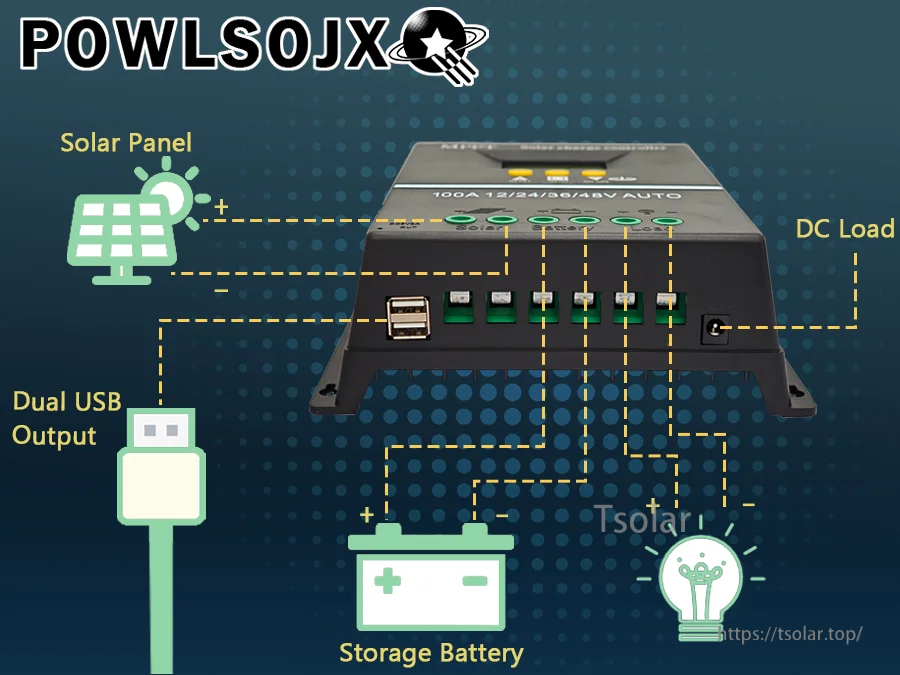
Dual 5V USB outputs add convenient device charging alongside solar, battery, and DC load terminals.
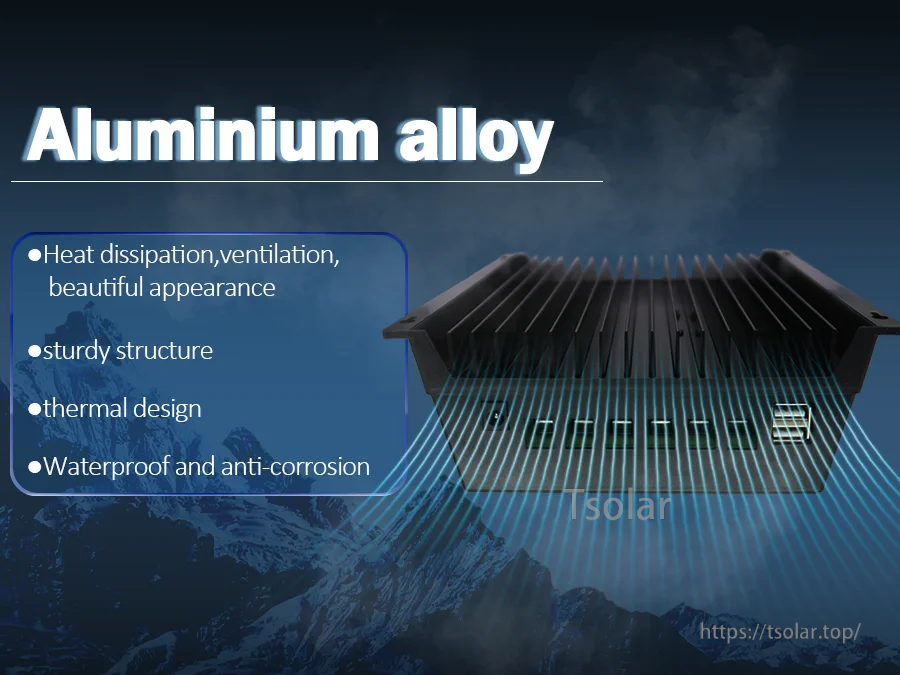
An aluminium-alloy, finned housing helps dissipate heat during higher-current charging.

Suitable for off-grid power management in home, RV, marine, and lighting applications.