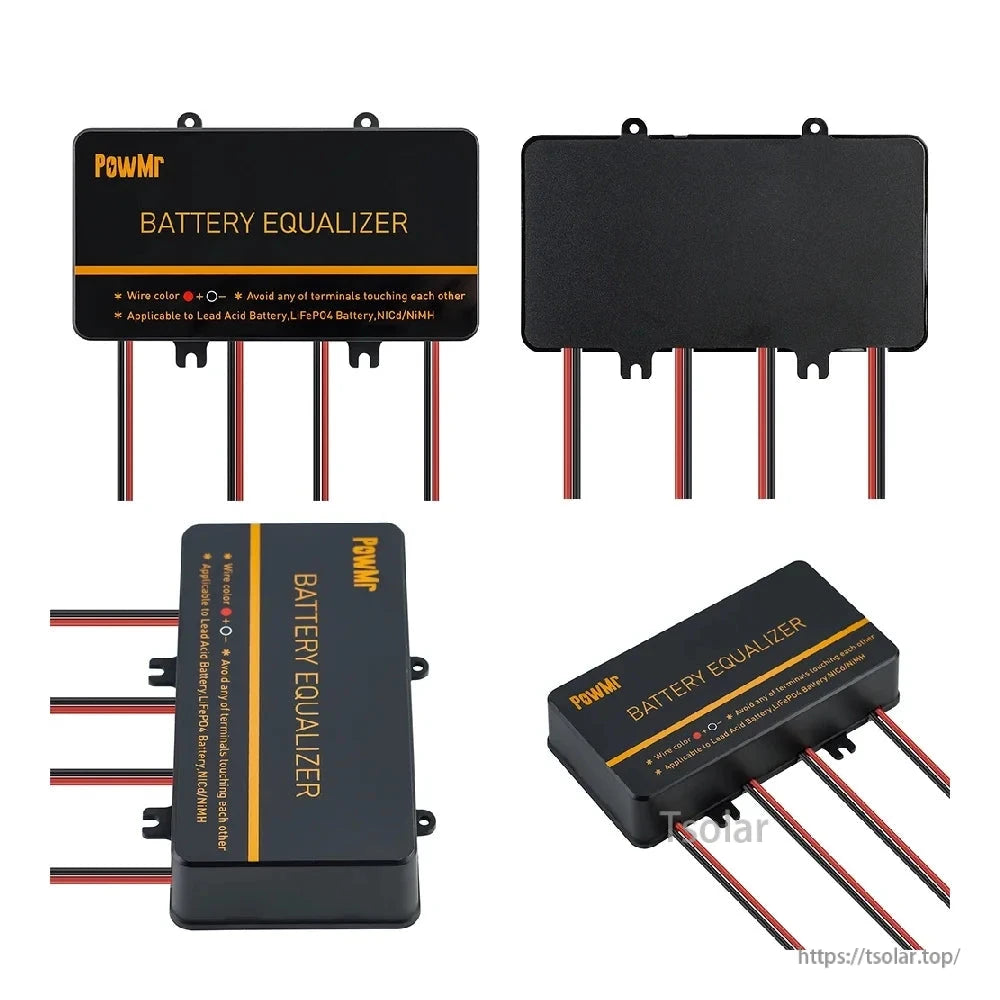
Overview
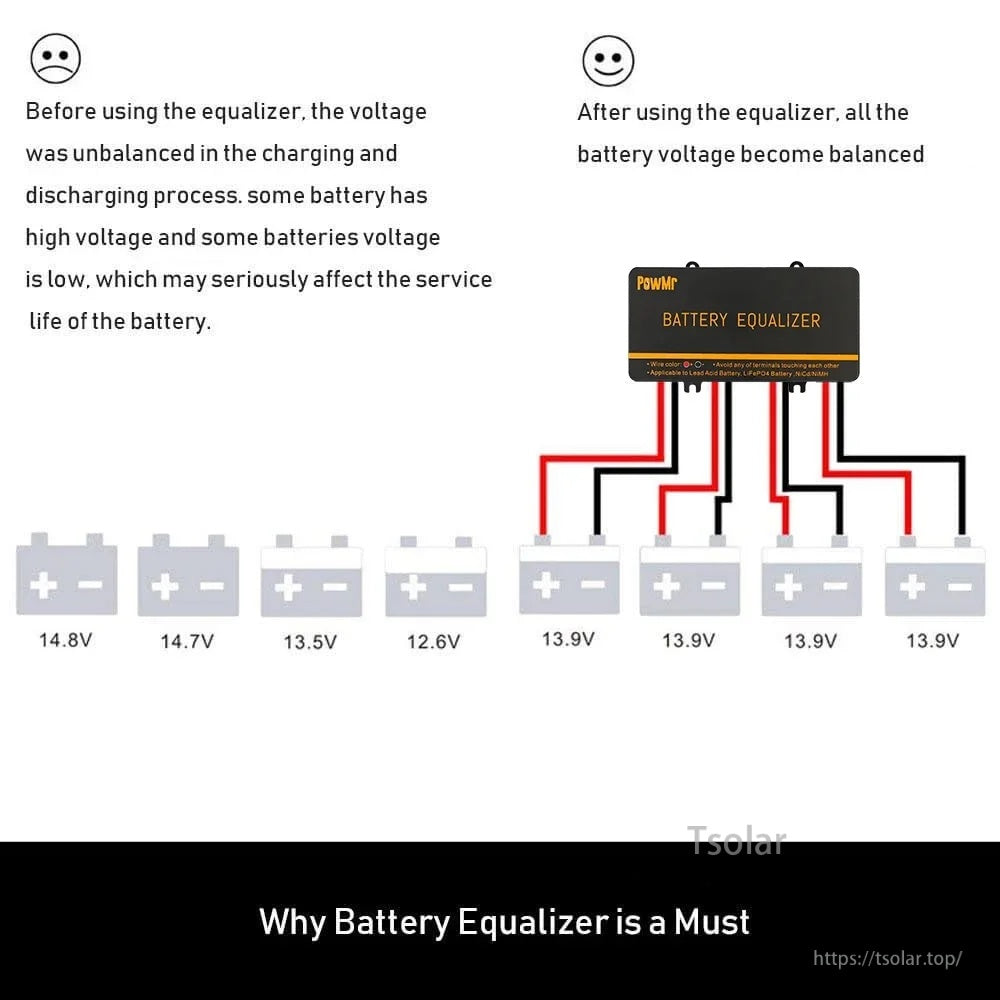
The PowMr battery balancer (battery equalizer) is designed for series-connected battery packs to help maintain voltage balance during charging and discharging. It uses energy transfer balancing technology to bidirectionally compensate battery voltages, automatically activating when the voltage difference between two cells reaches 10 mV and transferring current from the higher-voltage side to the lower-voltage side until equilibrium is achieved. It can remain continuously connected 24/7 for automatic balancing.
Battery equalizers help reduce imbalance caused by differences in chemical composition, temperature, and self-discharge rates between cells in a series battery bank, which can otherwise lead to overcharge/undercharge conditions and shortened battery life.
Key Features
- Models shown: BE24-N / BE48-N; supports parallel and series battery configurations.
- Balancing function: balance battery charge & discharge.
- Automatic activation threshold: 10 mV voltage difference between two cells.
- Activation condition: activates when voltage exceeds 2.4 V; applicable to single-cell voltage ranges from 2.4 V to 12 V.
- Battery compatibility stated: lead-acid batteries (VRLA; sealed/AGM, flooded, gel, calcium), lithium iron phosphate (LiFePO4/LFP), nickel-cadmium (Ni/Cd), nickel-metal hydride (Ni/MH).
- Protection: reverse polarity protection.
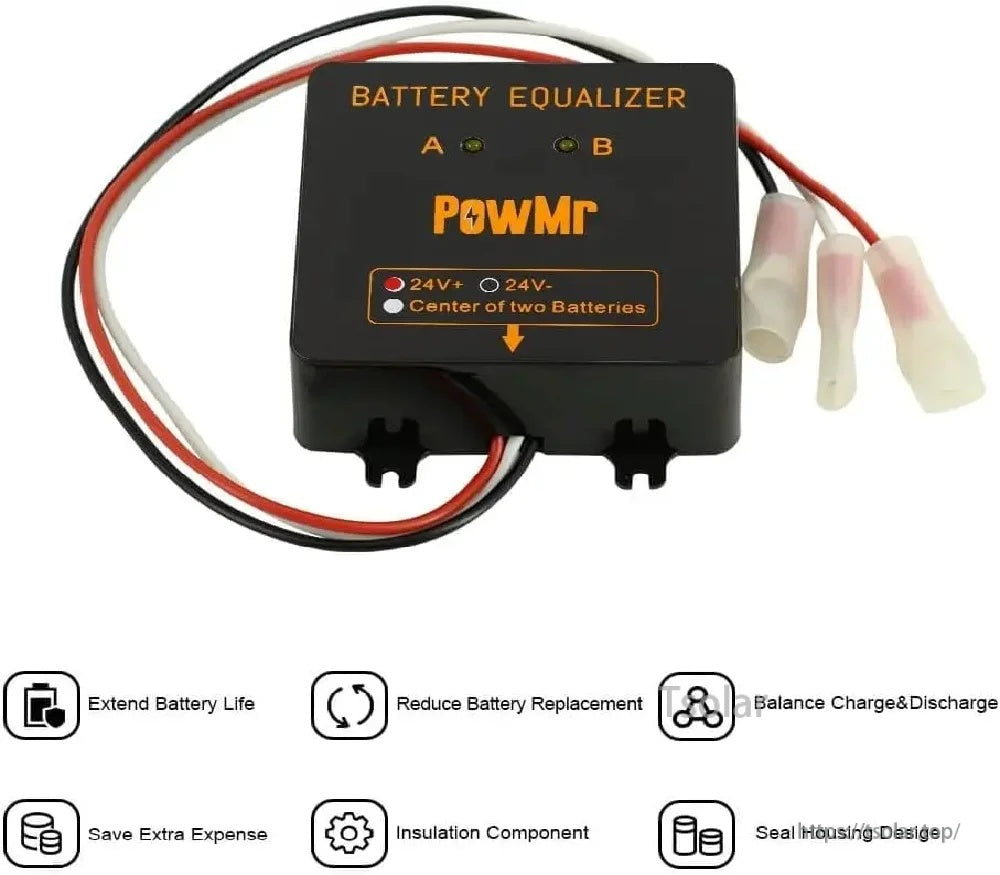
- Housing/features text shown: insulation component; seal housing design.
- On-product cautions: avoid any terminals touching each other.
Interface Description
- Balanced working state area: A stands for high voltage group; B stands for low voltage group.
- Under voltage warning area: A represents under voltage of high voltage area; B represents under voltage of low voltage group.
- LED power indicator.
- Switch (labeled “Le switch” in product materials).
Specifications
| Brand | PowMr |
| Product | Battery Balancer |
| Certification | CE |
| Model Number | BEN24-N / BEN48-N |
| Function | Balance Battery Charge & Discharge |
| High-concerned chemical | None |
| Is Smart Device | No |
| Origin | Mainland China |
| Customized | Yes |
Model-Specific Parameters (from provided specification table)
| Parameter | BE24-N | BE48-N |
|---|---|---|
| Battery nominal voltage | 2*12V | 4*(2.4V/3.6V/6V/9V/12V) |
| Optimizing current | 0-5A | 0-10A |
| Qulescent current | <3mA | 5mA(12V) 1.2mA(2.4V) |
| Dimensions | 78*78*28mm | 69*129*28 mm |
| Protection | Reverse polarity protection | Reverse polarity protection |
| Low Voltage Disconnect | 10V | 1.8V |
Additional Parameters Shown in Product Materials
| Working Voltage | 4x0.4/3.6/6/12V |
| Compensate Current | 0-10A |
| Standby Current | <1.8 (unit not specified) |
| Temperature | -7.6°F - 131°F |
| Dimension | 2.44 x 4.88 x 1.06 in |
| Protection | reverse polarity protection |
Connection
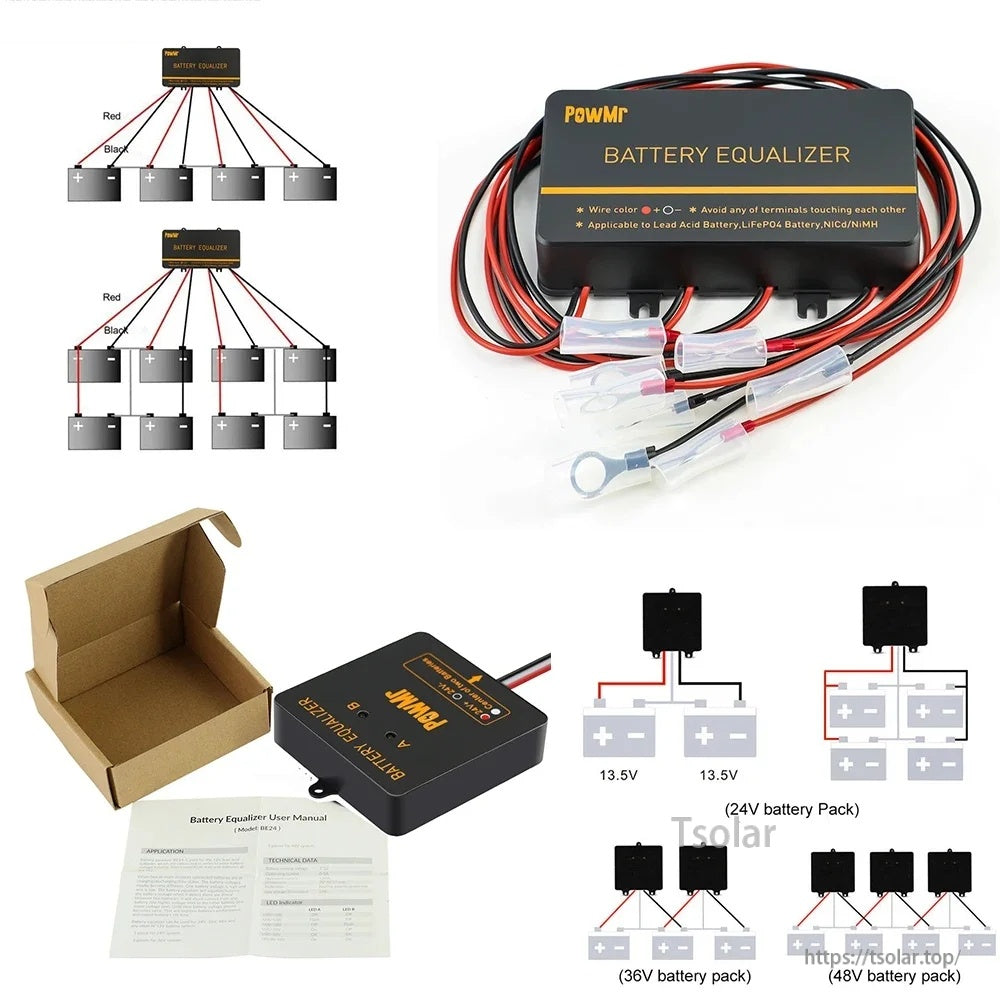
- Red cable: connect to positive (+) pole.
- Black cable: connect to negative (-) pole.
- White cable: connect to the middle connection point of the two series batteries (Battery B negative pole or Battery A positive pole).
- Connection note shown: batteries can be connected in any order; connect all + poles first and then - poles to help avoid short circuits; avoid any terminals touching each other; if there are extra cables, avoid short circuits.
Applications
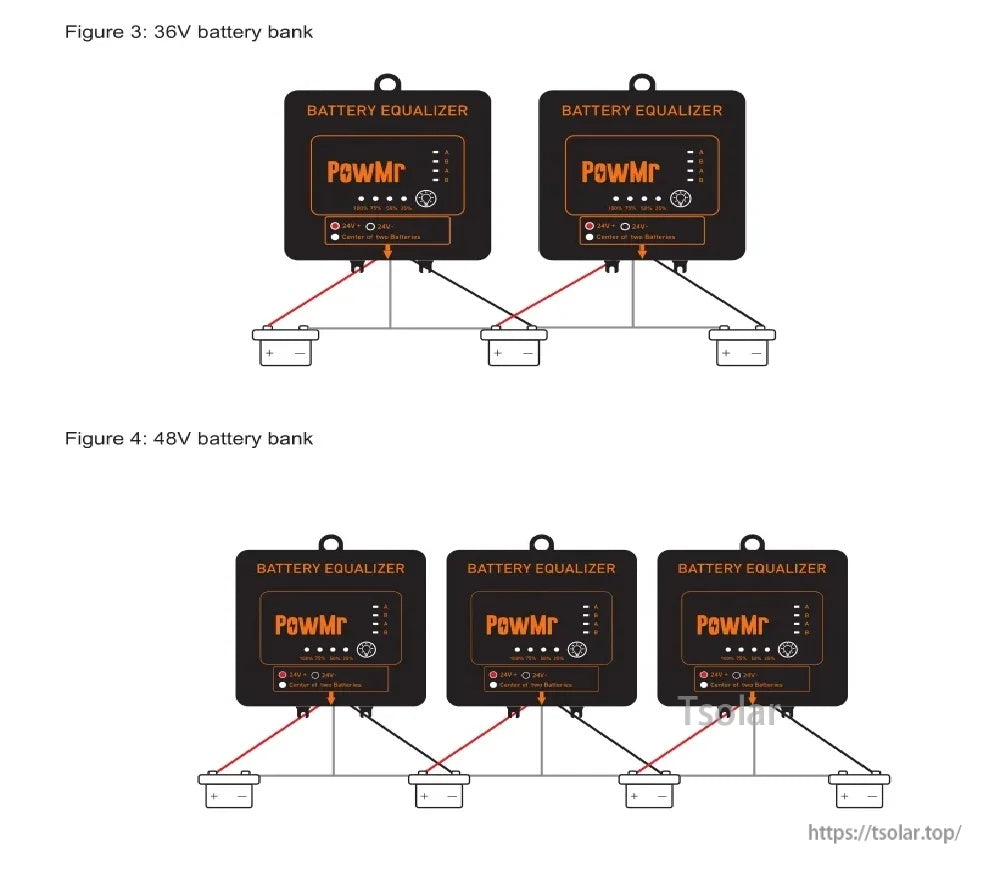
- Series-connected battery banks/packs (examples shown: 24V battery bank of 2 batteries; 24V battery bank of 4 batteries; 36V battery bank; 48V battery bank).
- Example wiring shown: 4 x 12V batteries in series; 8 batteries 2P4S wiring.
For installation support and product questions, contact https://tsolar.top/.
Details
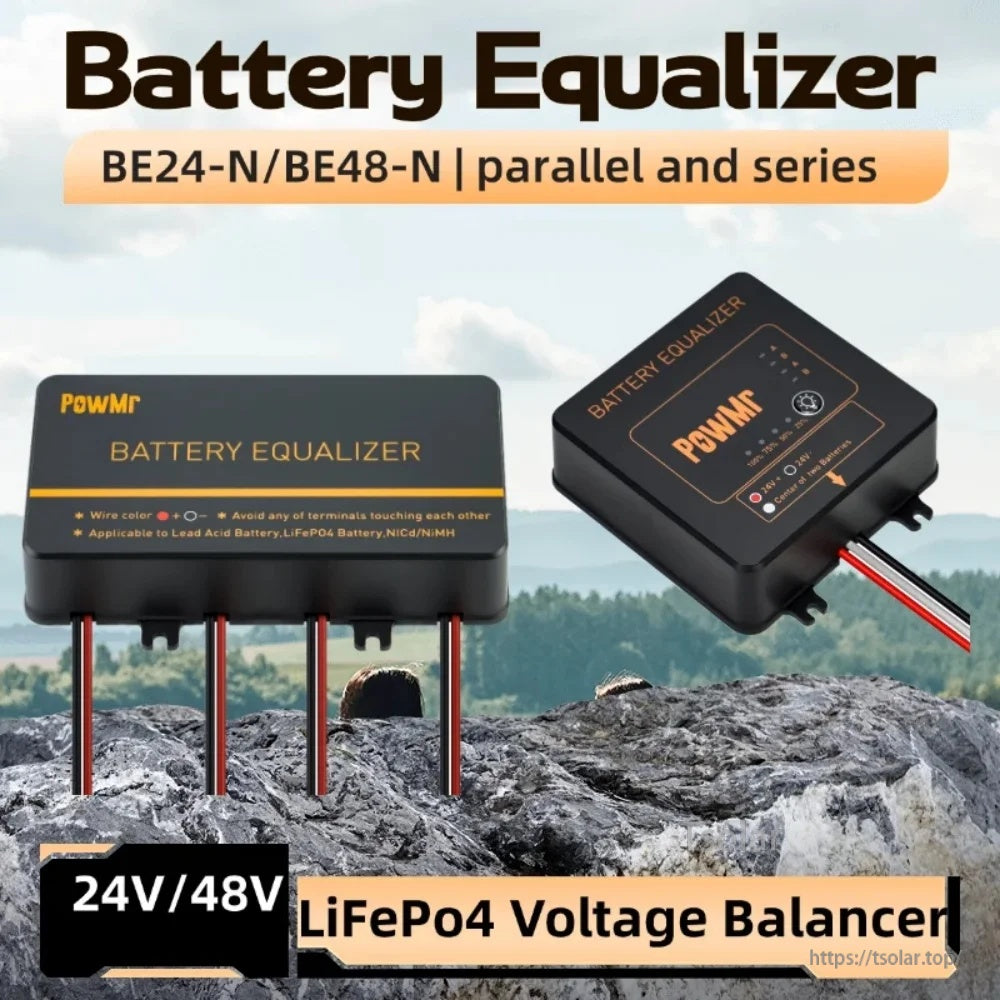
Keep series-connected battery banks balanced during charge and discharge with automatic energy-transfer equalization.
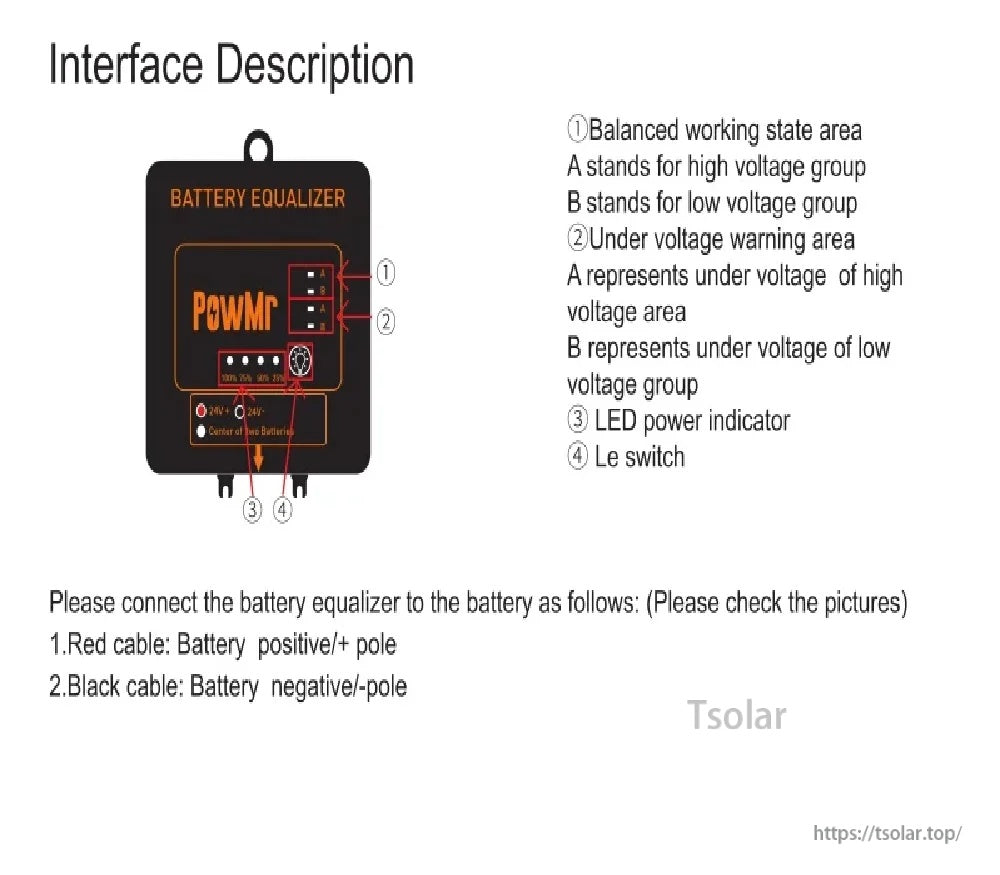
LED status indicators make it easy to check balancing and undervoltage conditions at a glance.
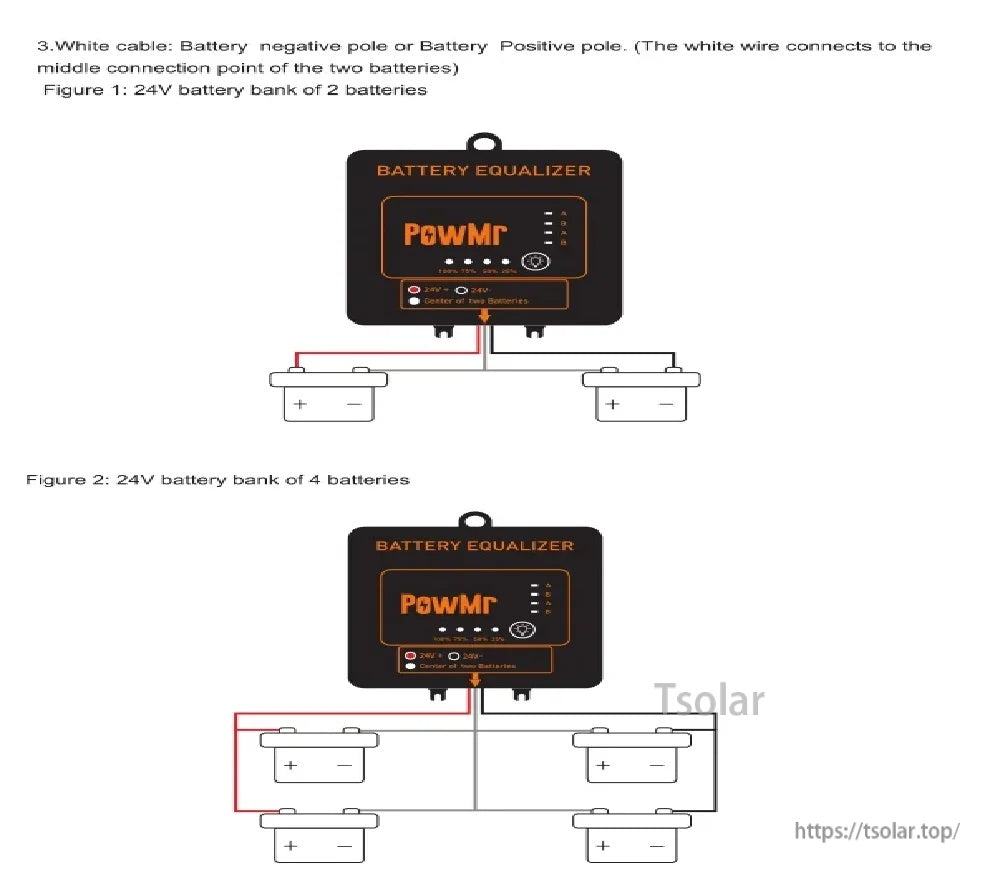
Multiple wiring options support common 24V battery-bank layouts while maintaining cell-to-cell voltage balance.
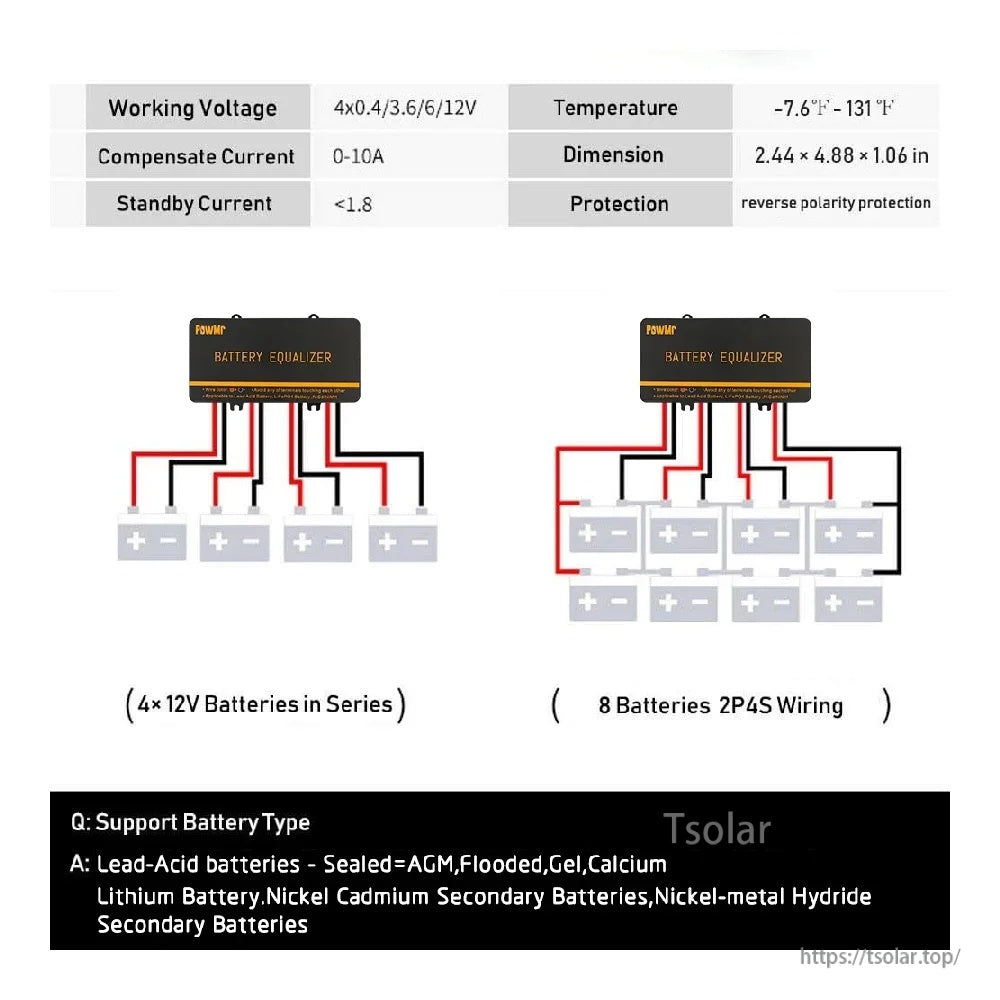
Supports common multi-battery configurations and includes reverse-polarity protection for safer installation.
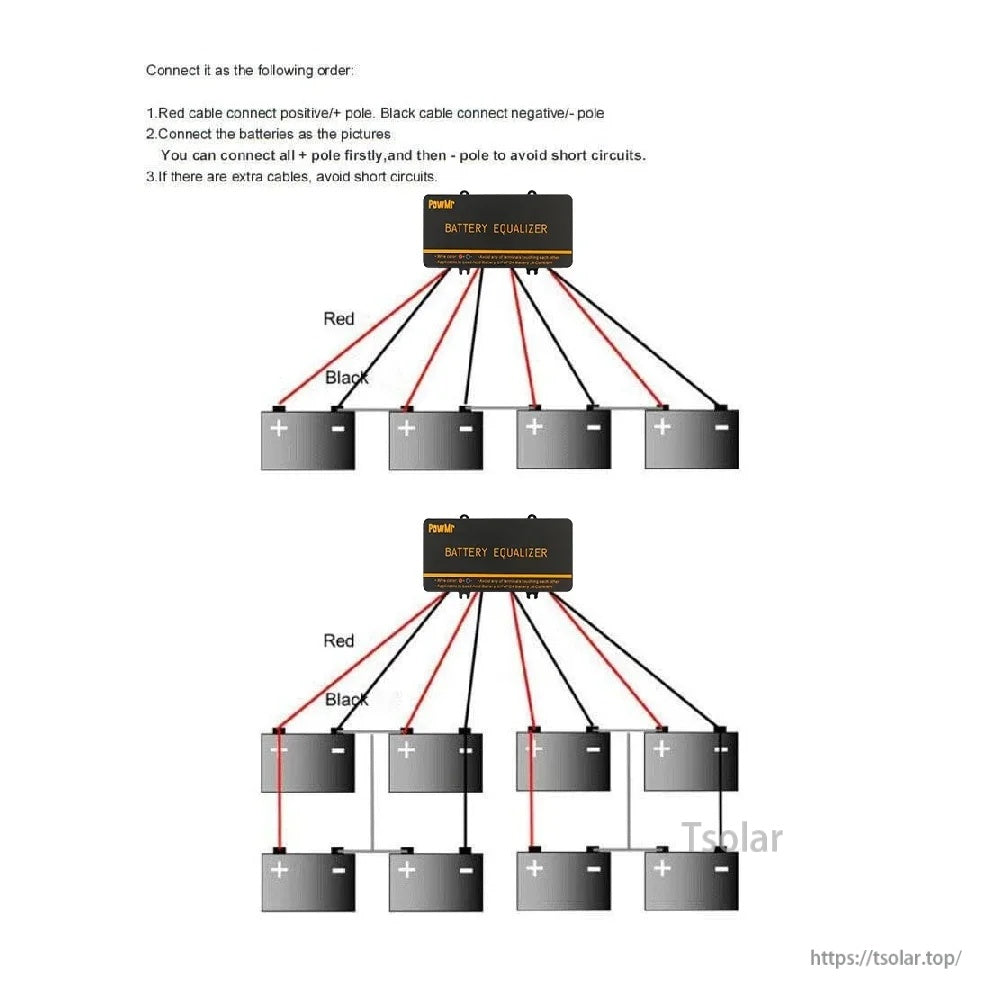
Follow the recommended connection order to reduce the risk of shorts when wiring red positive and black negative leads.
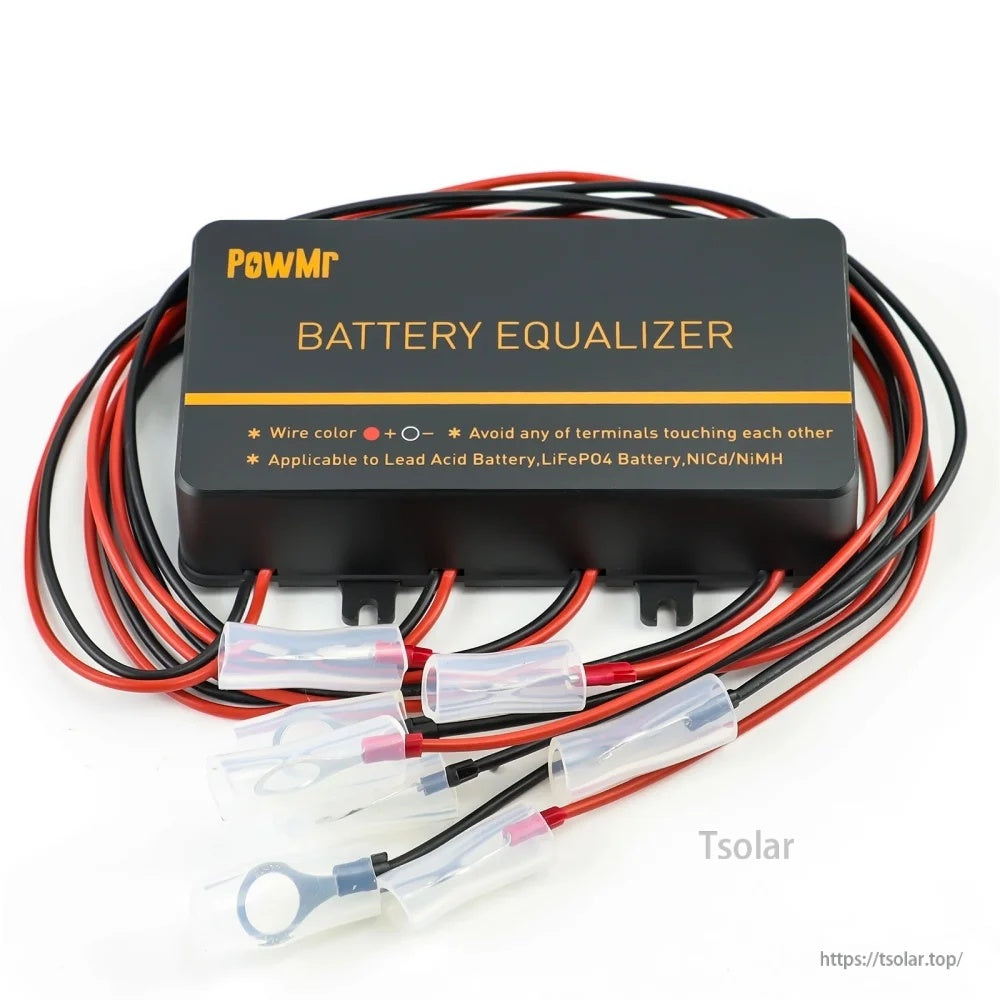
Prewired leads with insulated ring terminals help simplify hook-up to series battery banks for ongoing balancing.