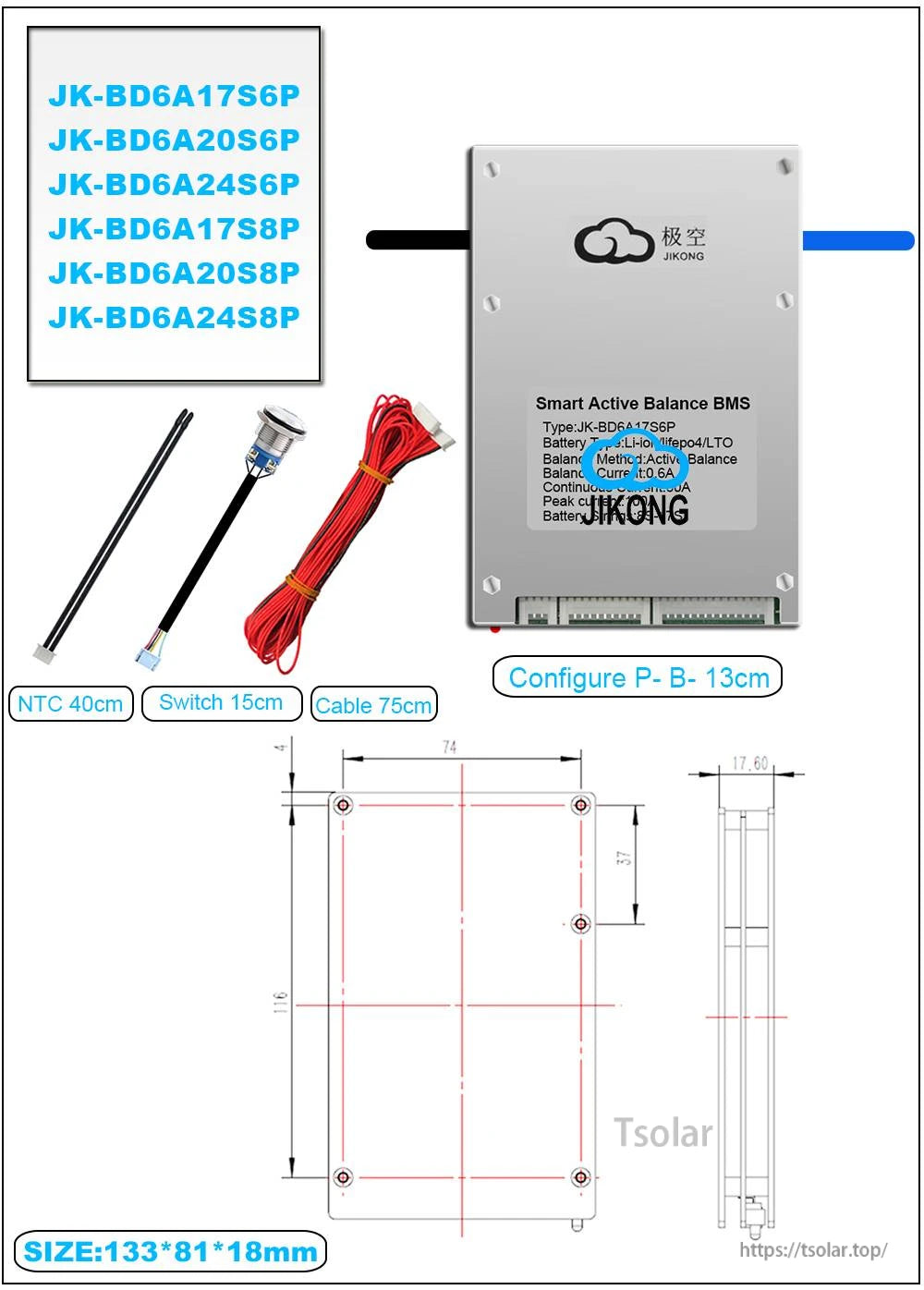
Overview
JKBMS BD6A20S8P is an active balance smart BMS for lithium battery packs, supporting 7S–20S (Li-ion), 8S–20S (LiFePO4), and 12S–20S (LTO). It features 0.6A active balancing (Full State On), 80A continuous charge/discharge capability, built-in Bluetooth for Android/iOS monitoring, and RS485 communication (default), with CANBUS noted as a customized option.
Key Features
- Supported battery strings: 7S to 20S (Li-ion); 8S to 20S (LiFePO4); 12S to 20S (LTO)
- Active balance: Active Balance (Full State On), balance current 600mA (0.6A)
- Current capability: 80A continuous charge current; 80A continuous discharge current; 150A maximum discharge current (MAX 2min)
- Power supply mode: battery pack self-powered
- Bluetooth: built-in; supports Android / iOS phone
- Communication: RS485 (default); CANBUS (customized option). Promotional materials also note an LCD interface by default and a heat function interface as a customized option.
- Protections / functions: over charge, over discharge, over current, short circuit, over temperature, and “all-in protection” (cable drop/poor contact); supports single cell voltage dropout detection; coulomb counter supported
- App usage notes: download the specified Bluetooth application and activate the BMS; search the relevant serial number to view data
For configuration or integration questions (RS485/CANBUS, app setup, wiring), contact support at https://tsolar.top/ or service@tsolar.top.
Specifications
| Model | BD6A20S8P |
| Number of battery strings (Li-ion) | 7S–20S |
| Number of battery strings (LiFePO4) | 8S–20S |
| Number of battery strings (LTO) | 12S–20S |
| Balance method | Active Balance (Full State On) |
| Balance current | 0.6A |
| Conductive resistance in main circuit | 1.2mΩ |
| Continuous charge current | 80A |
| Continuous discharge current | 80A |
| Maximum discharge current (MAX 2min) | 150A |
| Over charge protection current (ADJ) | 10–80A |
| Wiring method / output | Same port / Common Port |
| Size | 133*81*18mm |
| Single cell voltage detection range | 0–5V, error <10mV over full operating range, typical error value <5mV |
| Single cell voltage range | 1–5V |
| Voltage acquisition accuracy | ±5mV |
| Over charge protection voltage | 1.2–4.35V adjustable |
| Over charge release voltage | 1.2–4.35V adjustable |
| Over discharge protection voltage | 1.2–4.35V adjustable |
| Over discharge release voltage | 1.2–4.35V adjustable |
| Over current detect delay | 2~120S adjustable |
| Total voltage detection range | 0–100V, <0.5%FSR (FSR = full scale) |
| Current sense shunt | -150A~300A, error <0.5%FSR |
| SoC estimation accuracy | Error <8% (operating conditions) |
| Battery remaining capacity accuracy | Error range is less than 8% |
| Total cycle AH cumulative value | Half of the charge/discharge value |
| Operating power consumption | <5mA (without communication) / 15mA (485/CAN) |
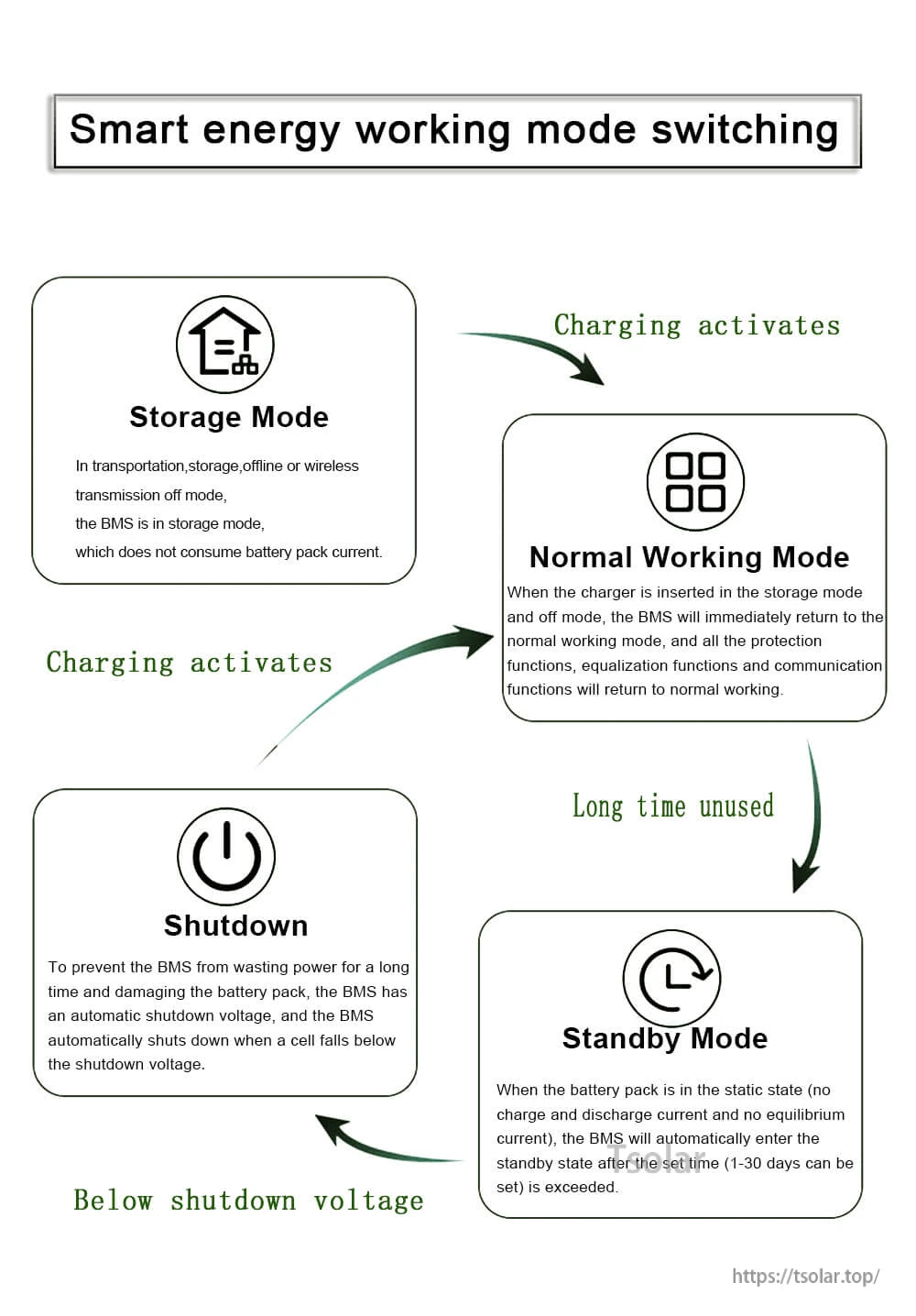
| Standby power consumption | <2mA |
| Temperature detection (range) | -40~125°C |
| Quantity of temperature detection | 3 pcs |
| Operating temperature | -40~85°C |
| Storing temperature | -40~95°C |
| Short circuit protection | YES |
| Temp protection | YES |
| Coulomb counter | YES |
| Bluetooth function | Support for Android & iOS phone |
| Other interfaces (default) | RS485 |
| Other interfaces (customized) | CANBUS |
Applications
- LiFePO4, Li-ion, and LTO battery packs requiring 7S–20S class monitoring and active balancing
- Energy storage battery packs where Bluetooth monitoring and RS485 communication are required
Details
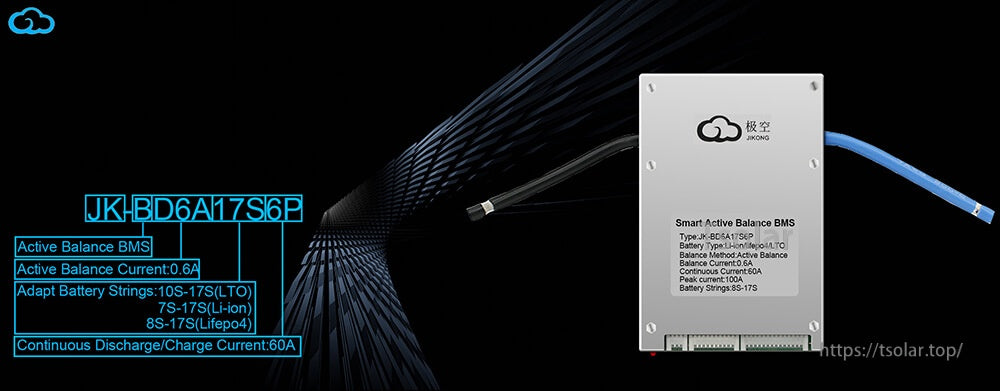
JKBMS active-balance smart BMS options cover multiple cell counts for Li-ion, LiFePO4, and LTO battery packs.
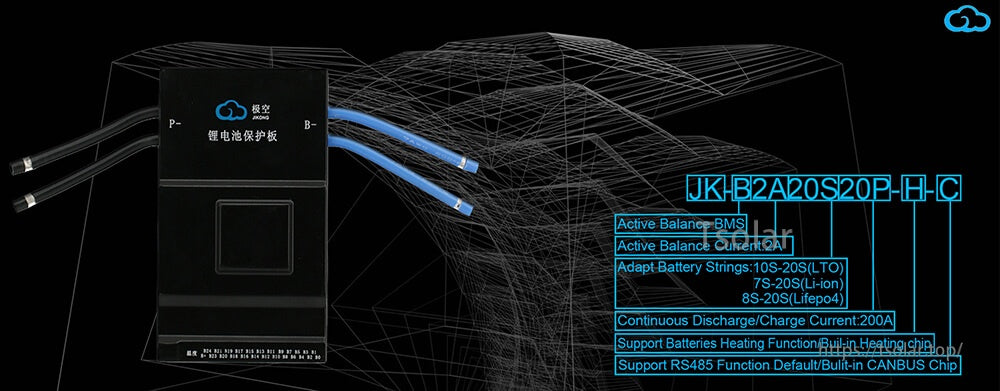
Built-in communication and an LCD interface make it easier to monitor pack status and integrate with external systems.
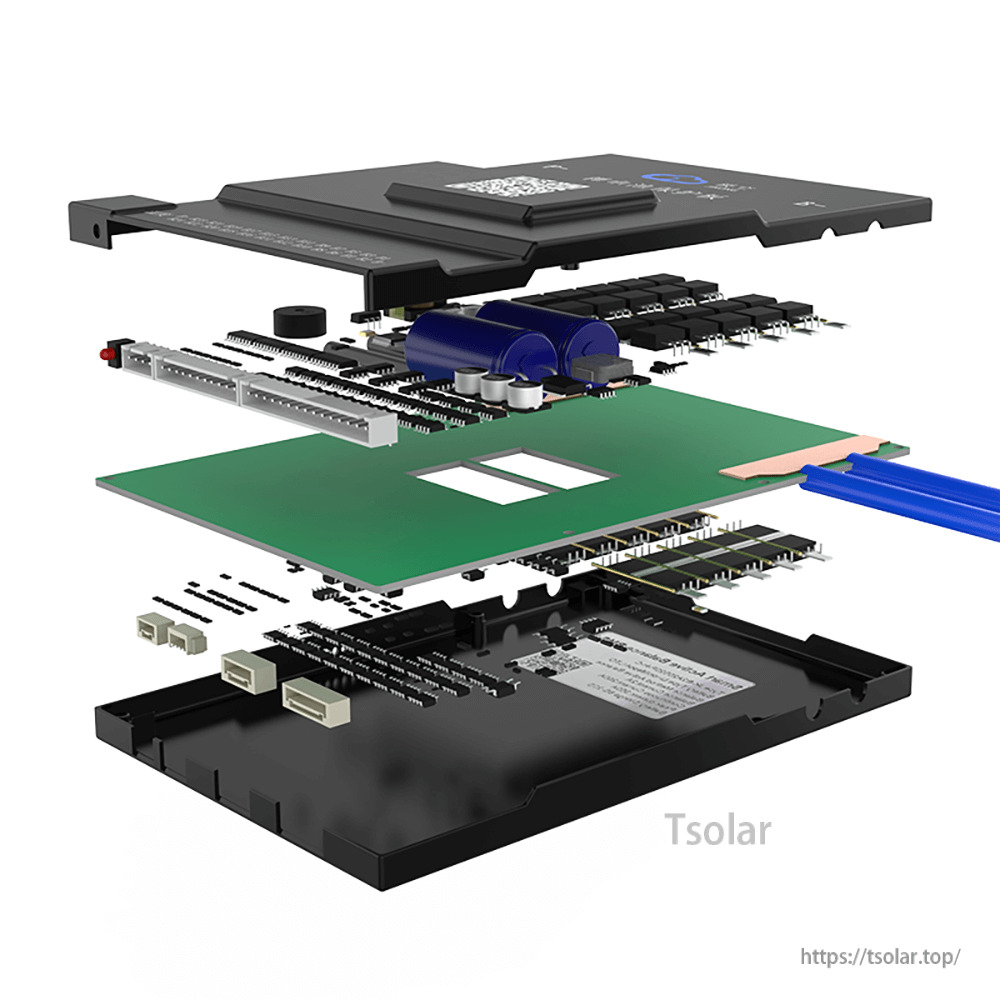
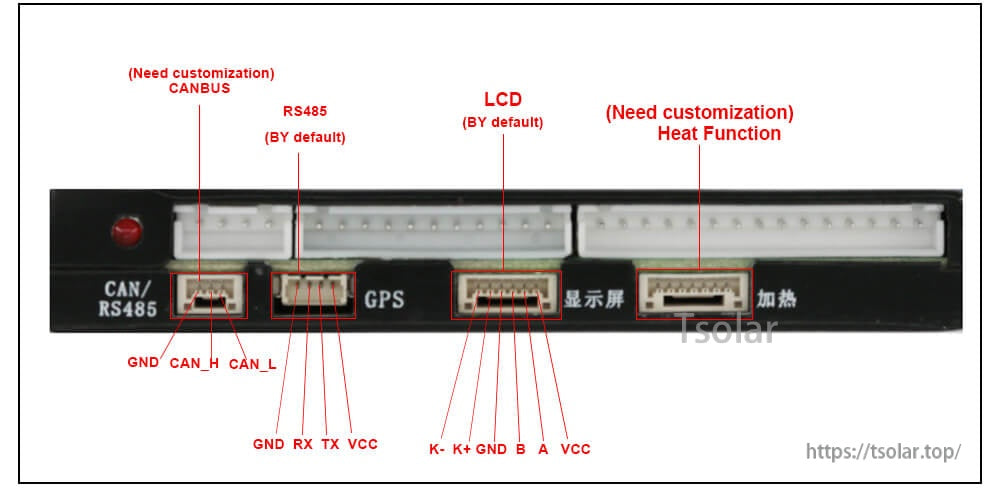
Connection headers are clearly labeled for RS485/CAN wiring plus the default LCD port and optional heater interface.
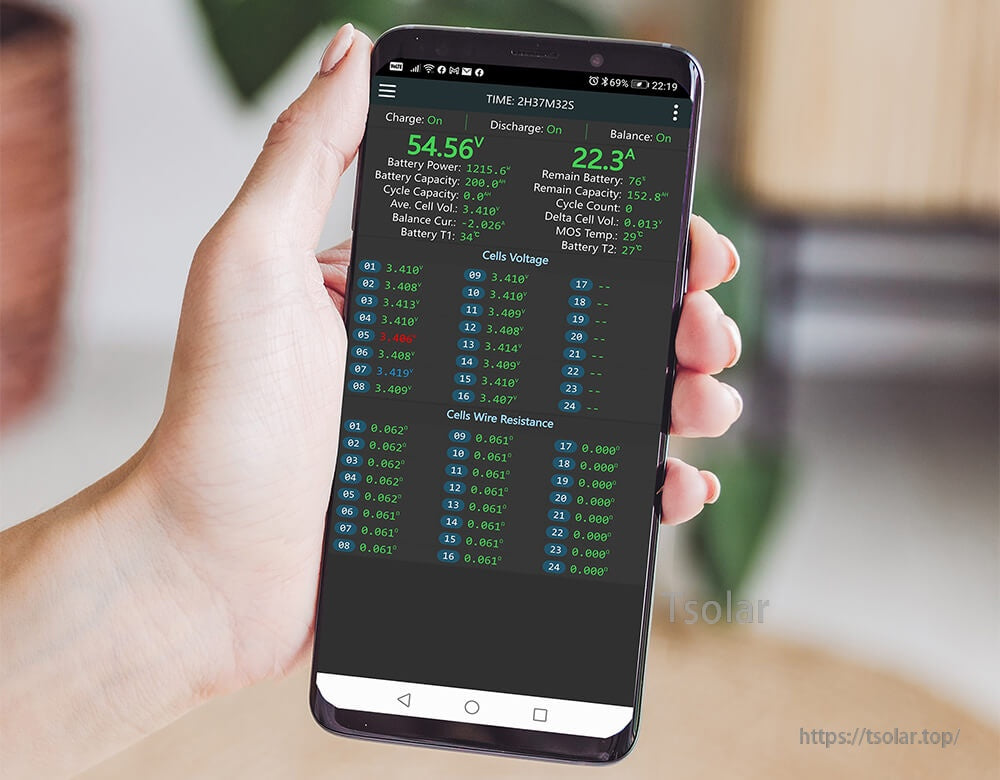
Bluetooth monitoring on iOS/Android provides live pack data, including total voltage, current, SOC, and per-cell readings.
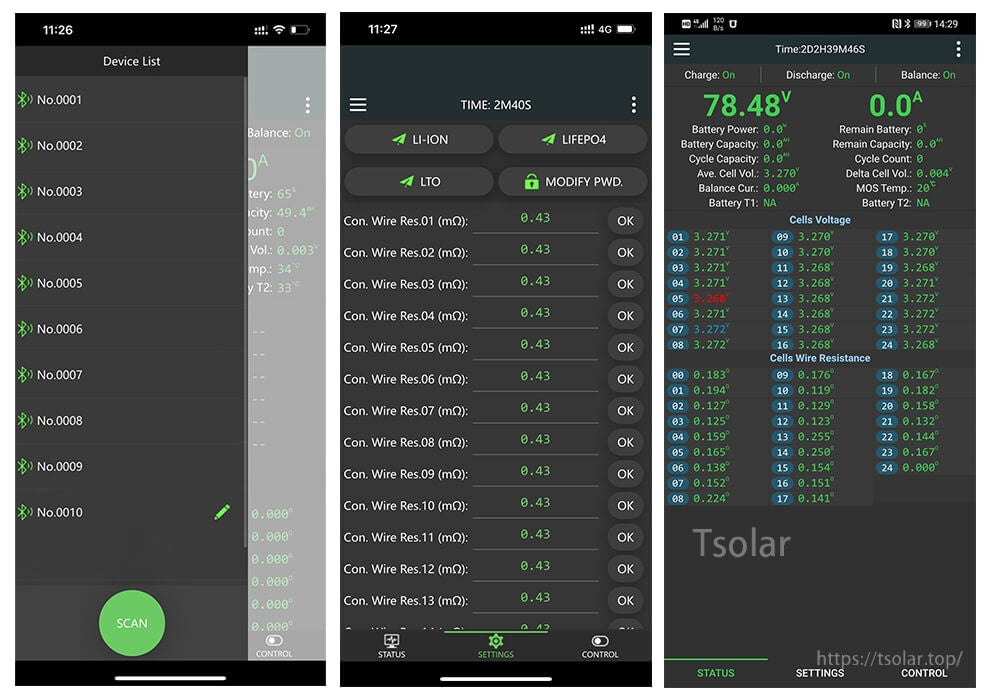
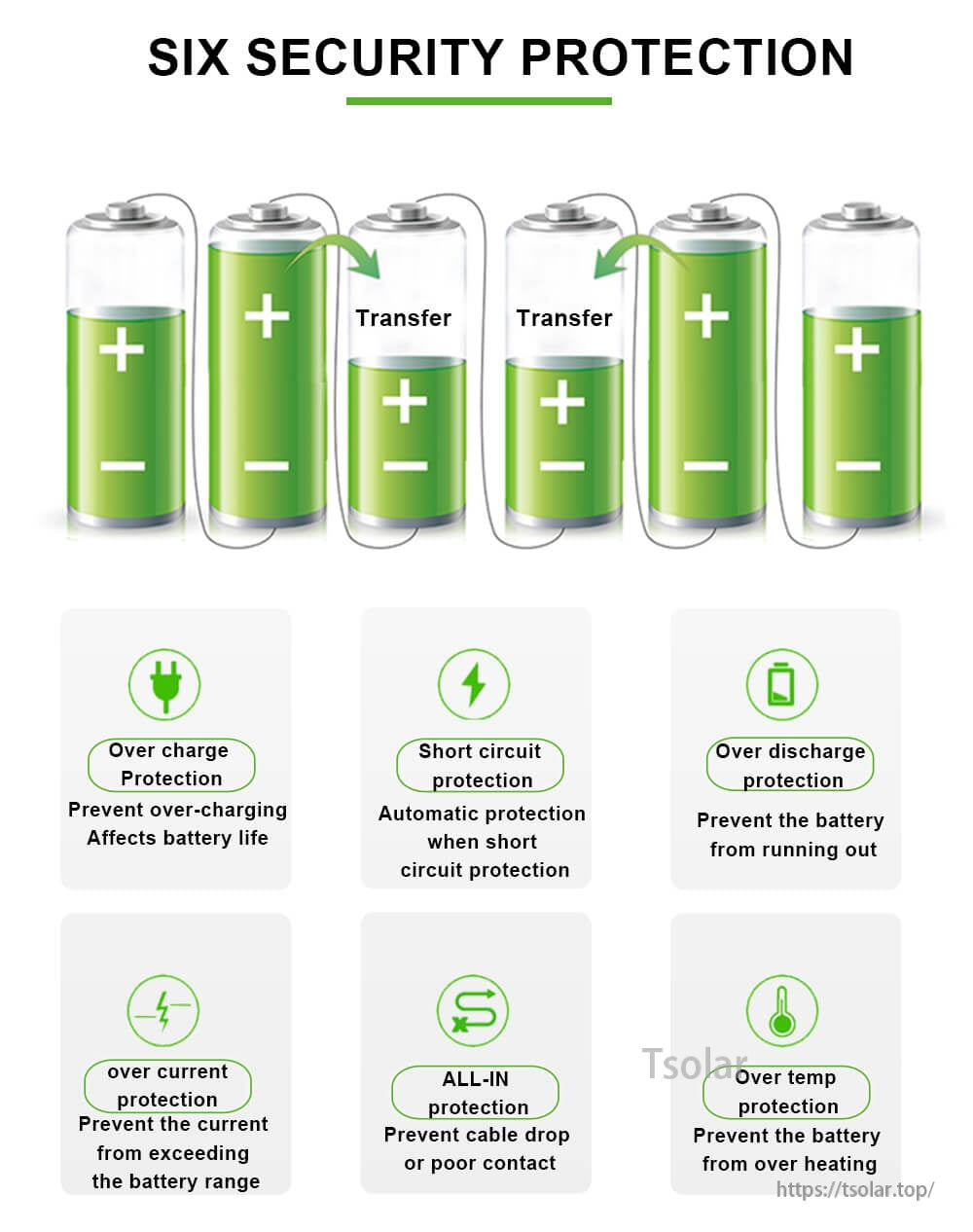
Multiple protection functions help safeguard the pack against overcharge, overdischarge, overcurrent, short circuit, and overheating.
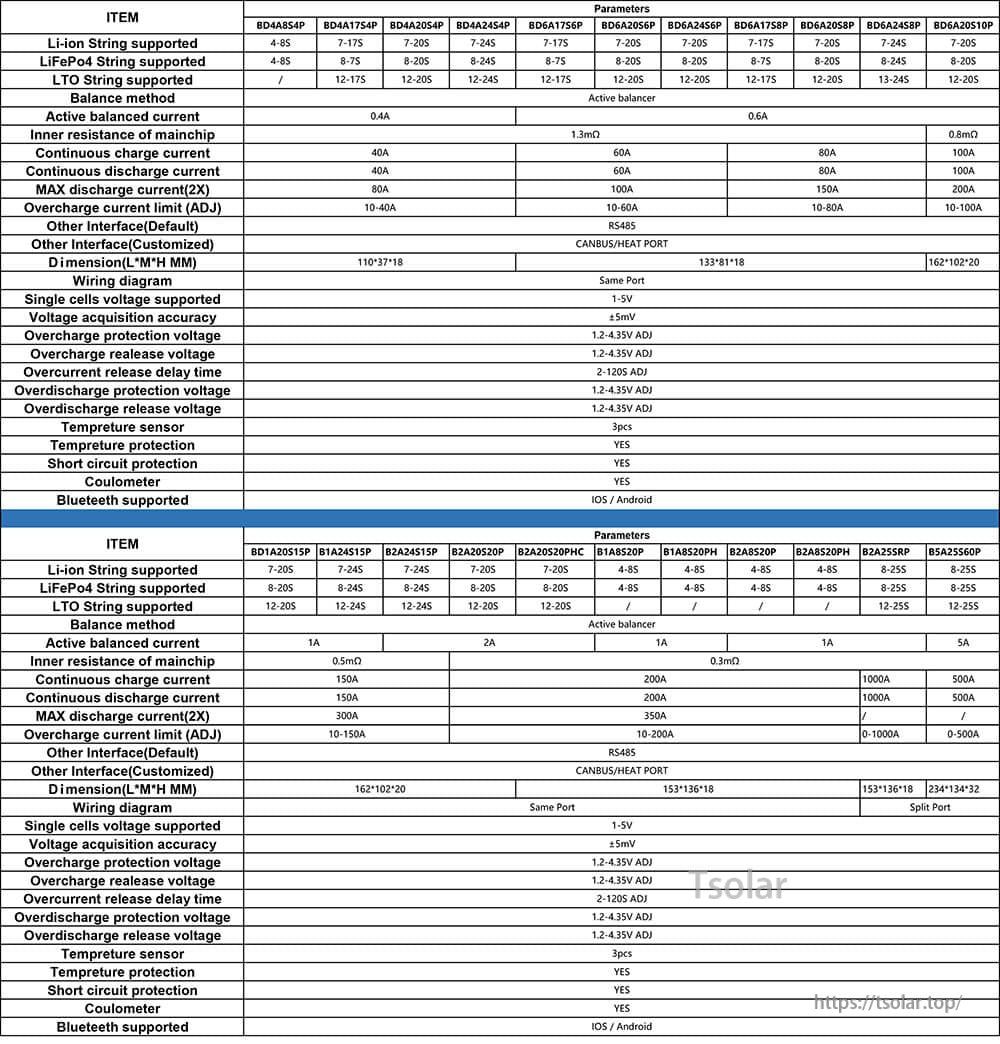
Use the specification table to confirm supported series counts, balancing current, and interface options for your build.