Overview
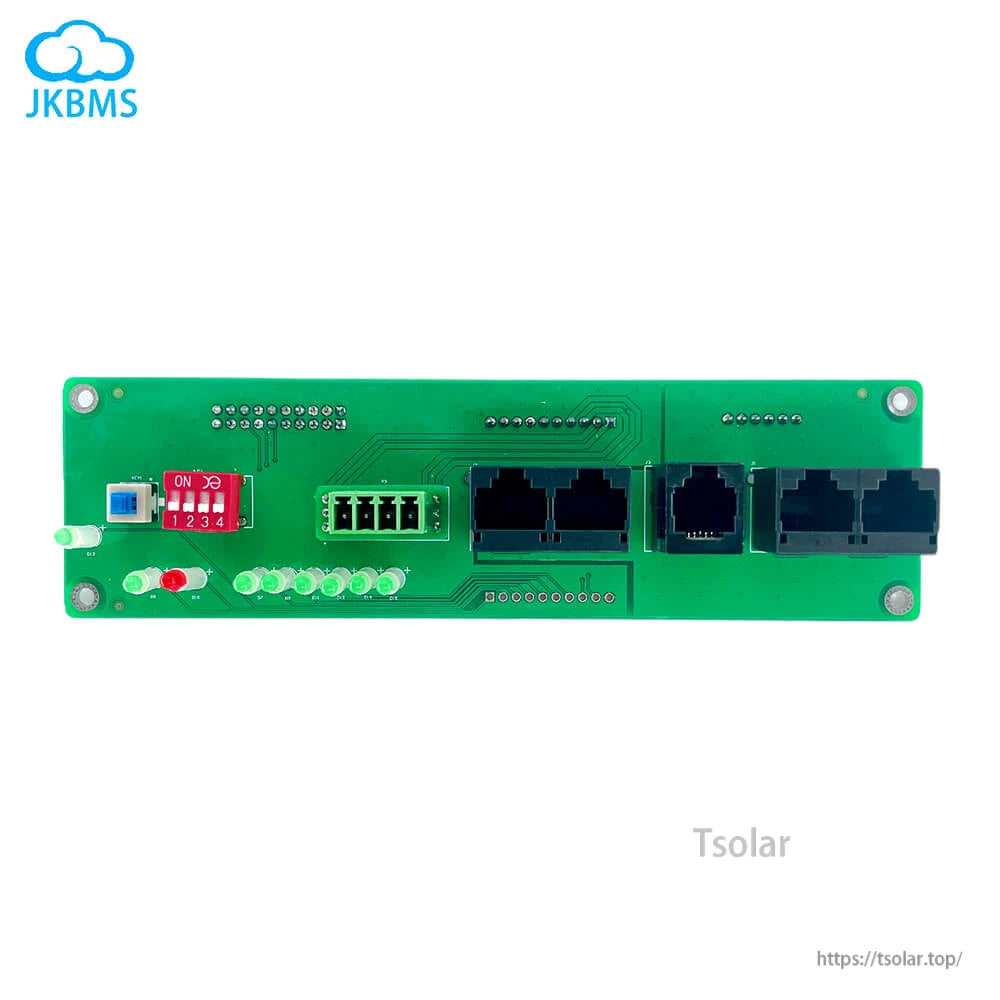
JKBMS PB1A16S15P is an active-balance inverter BMS designed for family energy storage battery packs. It supports Li-ion, LiFePO4, and LTO packs with built-in Bluetooth for Android/iOS monitoring, and communication options including RS485 (default) with CANBUS/HEAT listed as customized interfaces.
Key Features
- Battery strings supported: 7S-16S (Li-ion), 8S-16S (LiFePO4), 14S (LTO)
- Active balance (Full State On), balance current: 1000 mA (1 A)
- Continuous charge current: 150 A; continuous discharge current: 150 A
- Maximum discharge current (MAX 2 min): 300 A
- Common port / same-port wiring (Wiring Output: Common Port)
- Built-in Bluetooth; supports Android & iOS phones (use the specified Bluetooth app to activate and view data)
- Protection functions described: over charge, over discharge, over current, short circuit, over temperature, and “all-in” protection (cable drop/poor contact)
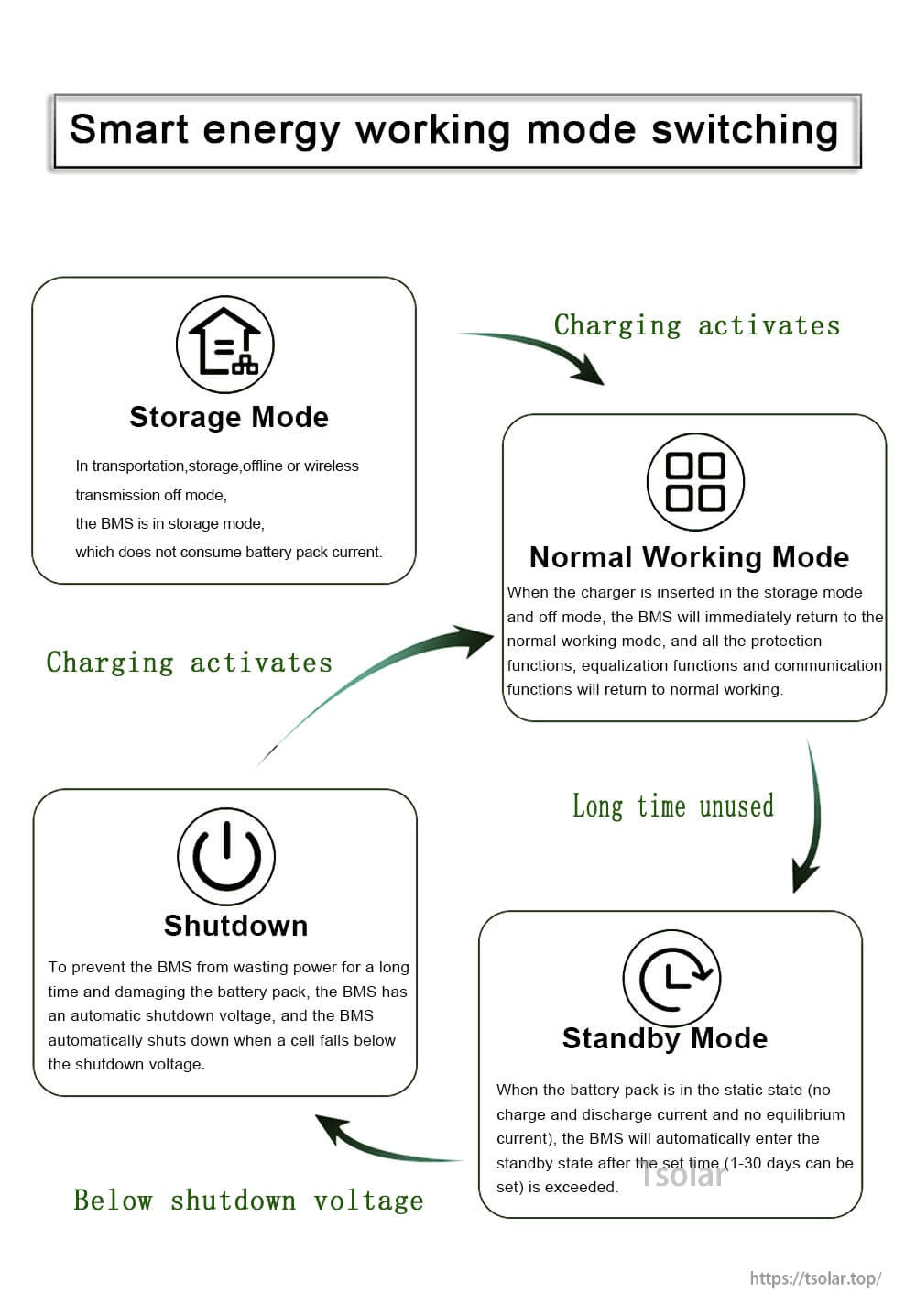
- Smart energy working mode switching described: Storage Mode, Normal Working Mode, Shutdown, Standby Mode (standby delay 1–30 days can be set)
Specifications
| Model | PB1A16S15P |
| Battery type | LiFePO4 / Li-ion / LTO |
| Number of battery strings (Li-ion) | 7S-16S |
| Number of battery strings (LiFePO4) | 8S-16S |
| Number of battery strings (LTO) | 14S |
| Power supply mode | The battery pack is self-powered |
| Balance method | Active Balance (Full State On) |
| Balance current | 1000 mA (1 A) |
| Continuous current | 150 A |
| Continuous charge current | 150 A |
| Continuous discharge current | 150 A |
| Maximum discharge current (MAX 2 min) | 300 A |
| Over charge protection current (ADJ) | 10-150 A |
| Conductive resistance in main circuit | 0.65 mΩ |
| Wiring method | Same port |
| Wiring output | Common Port |
| Single cell voltage detection range | 0-5 V (supports single cell voltage dropout detection) |
| Single cell voltage range | 1-5 V |
| Voltage acquisition accuracy | ±5 mV (typical error <5 mV; <10 mV over full operating range) |
| Over charge protection voltage | 1.2-4.35 V Adjustable |
| Over charge release voltage | 1.2-4.35 V Adjustable |
| Over discharge protection voltage | 1.2-4.35 V Adjustable |
| Over discharge release voltage | 1.2-4.35 V Adjustable |
| Over current detect delay | 2~120 S Adjustable |
| Total voltage detection range | 0-100 V, <0.5% FSR (FSR = full scale) |
| Current sense shunt | -150 A~300 A, Error <0.5% FSR |
| SoC estimation accuracy | Error <8% (operating conditions) |
| Battery remaining capacity accuracy | Error range is less than 8% |
| Total Cycle AH cumulative value | Half of the charge/discharge value |
| Operating power consumption | <5 mA (without communication) / 15 mA (485/CAN) |
| Standby power consumption | <2 mA |
| Temperature detection range | -40~125°C |
| Quantity of temperature detection | 4 pcs |
| Operating temperature | -40~85°C |
| Storing temperature | -40~95°C |
| Short circuit protection | YES |
| Temp protection | YES |
| Coulomb counter | YES |
| Bluetooth function | Support for Android & iOS phone |
| Other interfaces (default) | RS485 |
| Other interfaces (customized) | CANBUS/HEAT |
| Size | 300*100*18 mm |
Applications
- Home/family energy storage battery packs using LiFePO4, Li-ion, or LTO
- Inverter battery systems where RS485 communication is required; CANBUS/HEAT options listed as customized
PB series inverter BMS models are stated as upgraded to the latest V19 version; orders placed after June 1, 2025 are stated to be set to V19 by default. For pre-sales compatibility questions (strings, wiring, RS485/CAN settings) or after-sales support, contact https://tsolar.top/ or service@tsolar.top.
Details
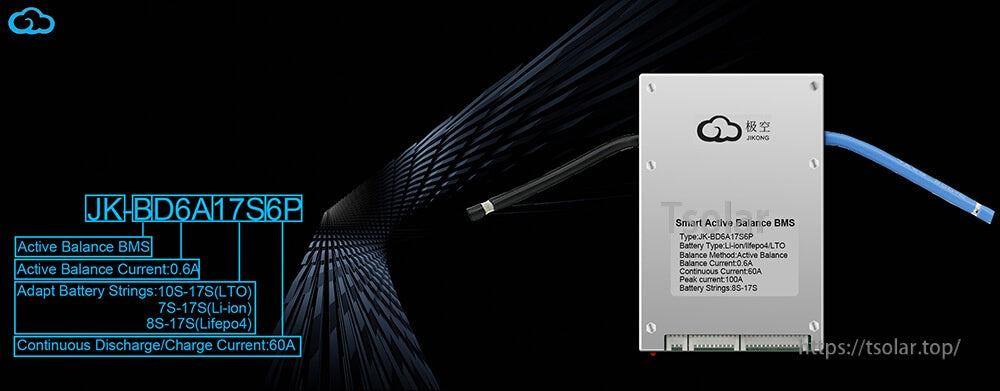
Designed for home energy storage packs, the JKBMS smart BMS combines active balancing with inverter-ready communication options.
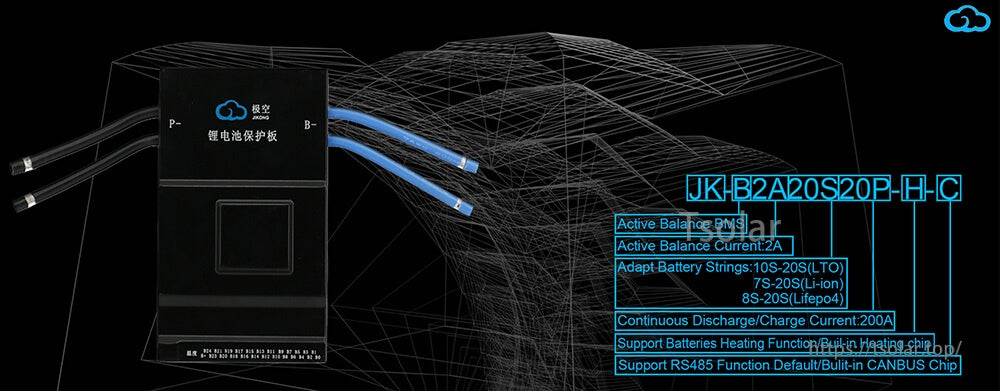
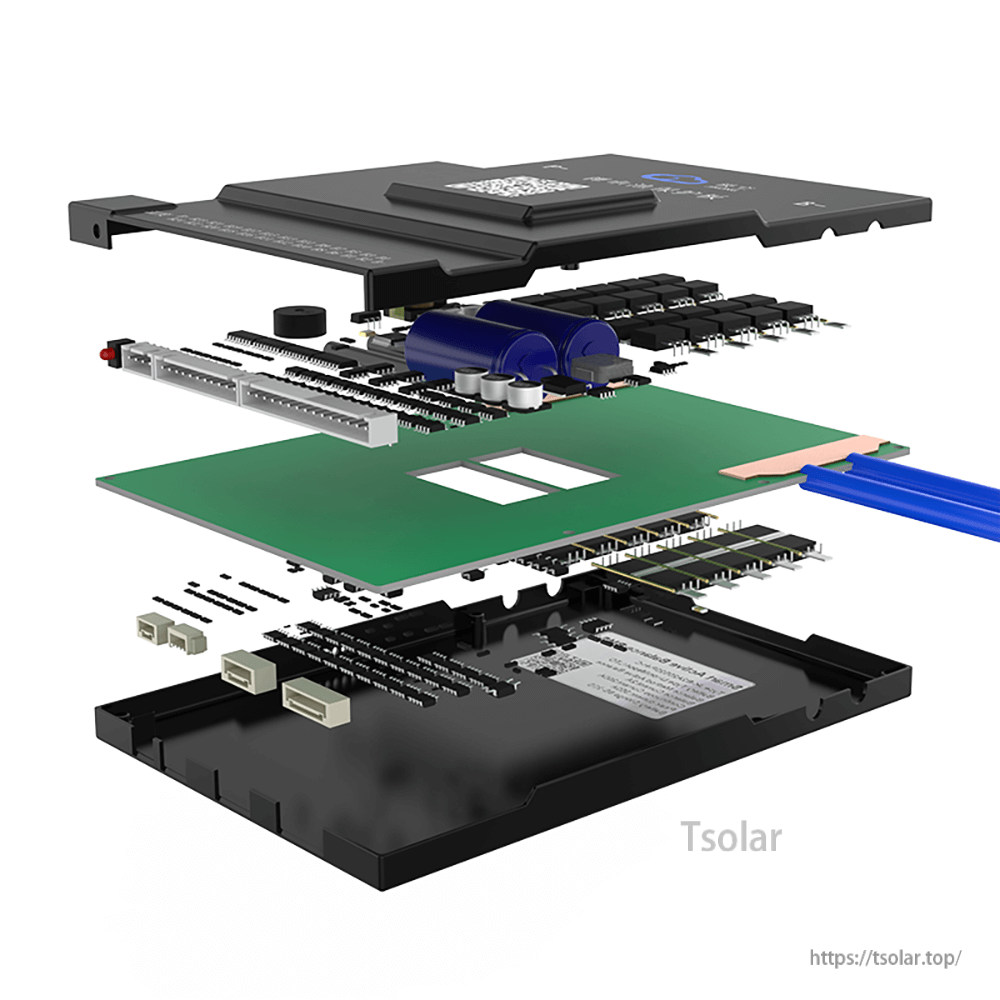
A layered internal build supports stable current handling, cell sensing, and communication hardware inside a compact enclosure.
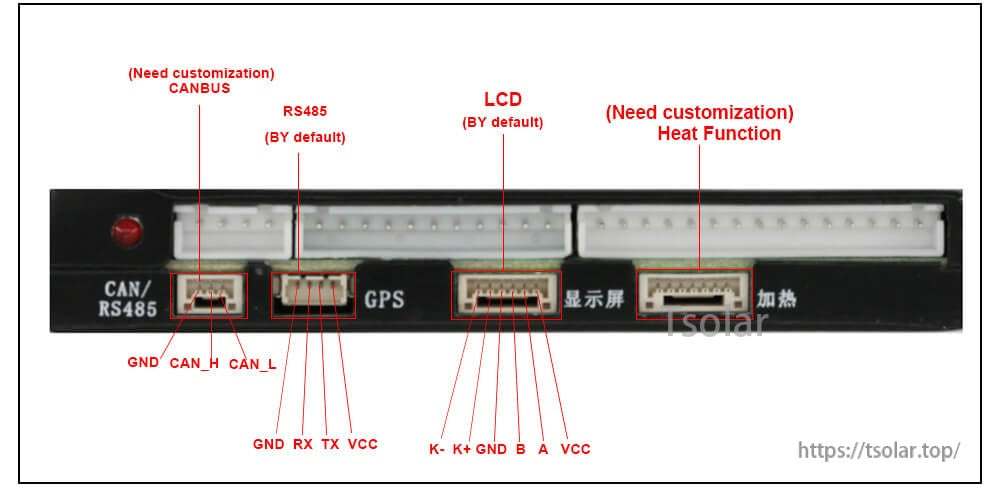
RS485 communication is standard, while CAN and heating interfaces may be available as customization depending on the configuration.
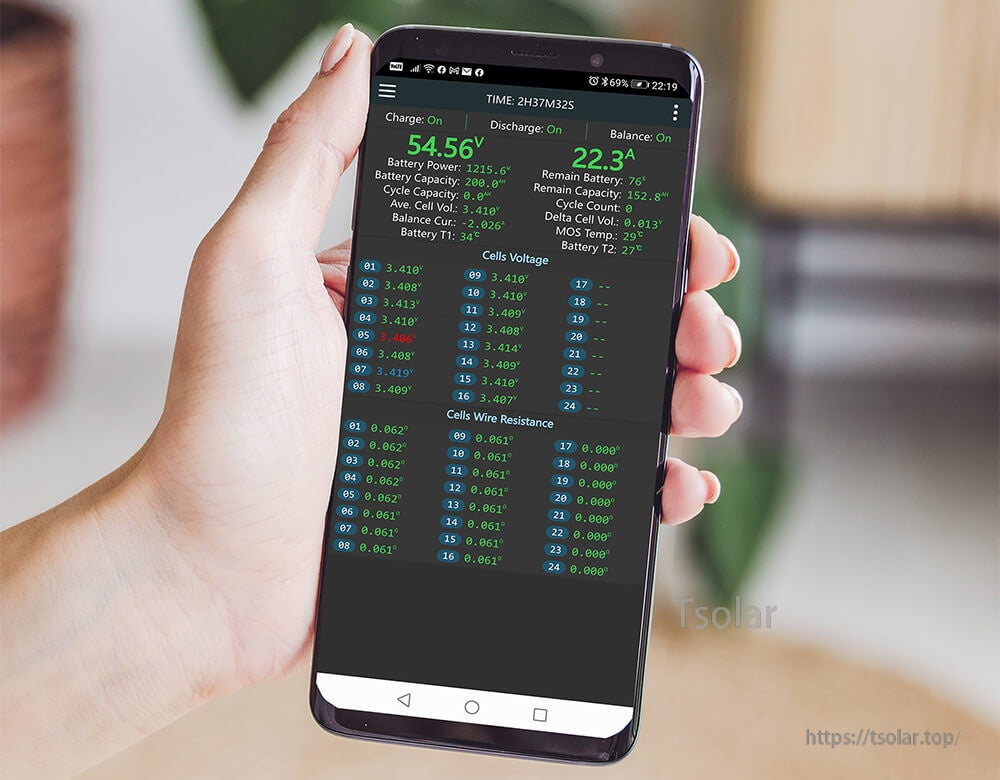
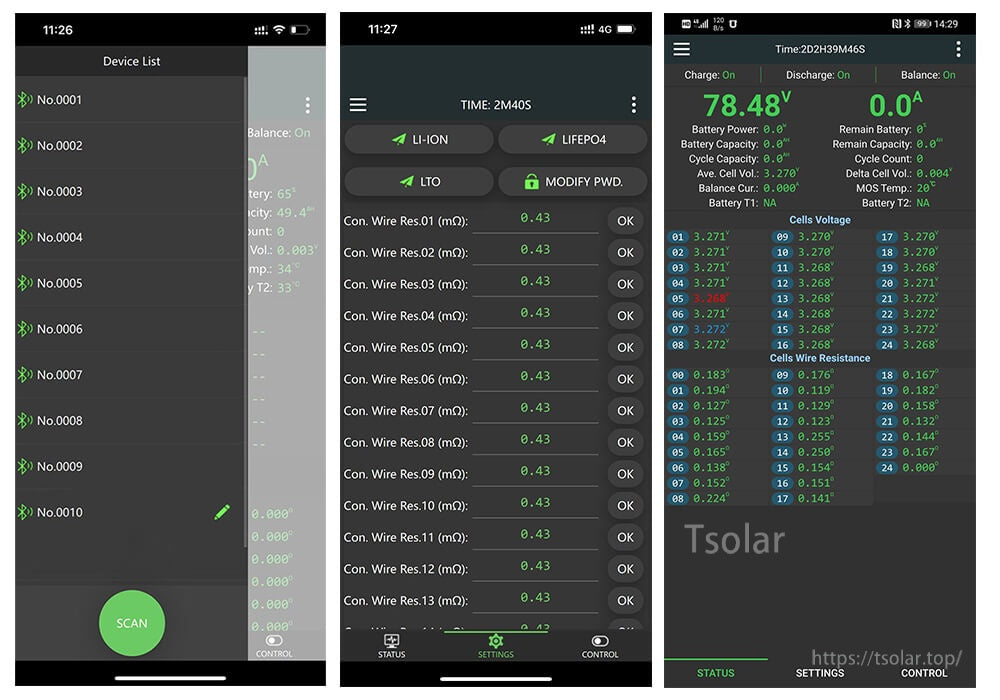
Built-in Bluetooth allows Android/iOS monitoring for live pack data, per-cell voltage, and status checks.
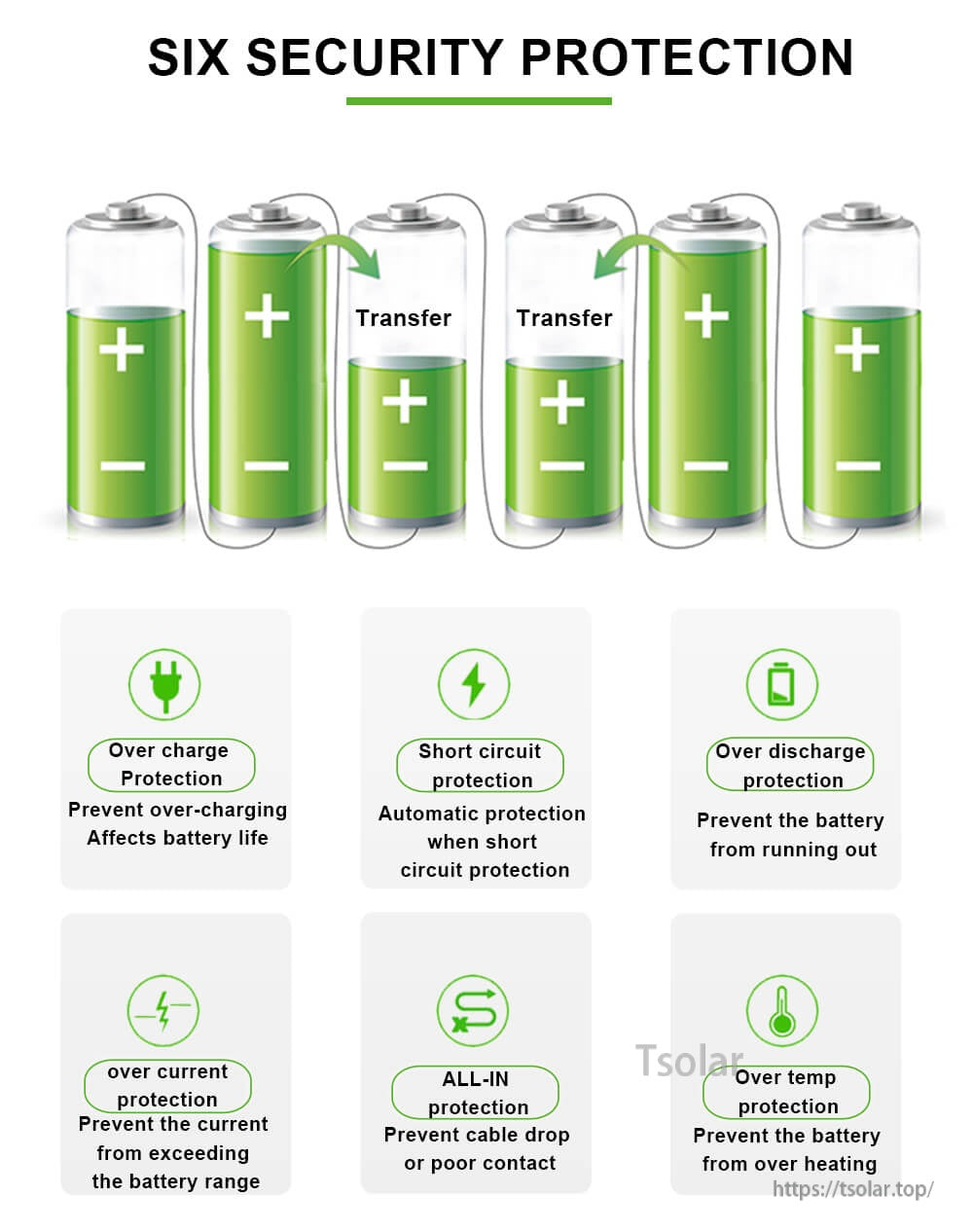
Protection functions cover charging/discharging limits, short-circuit response, temperature protection, and cable-drop/poor-contact alerts.
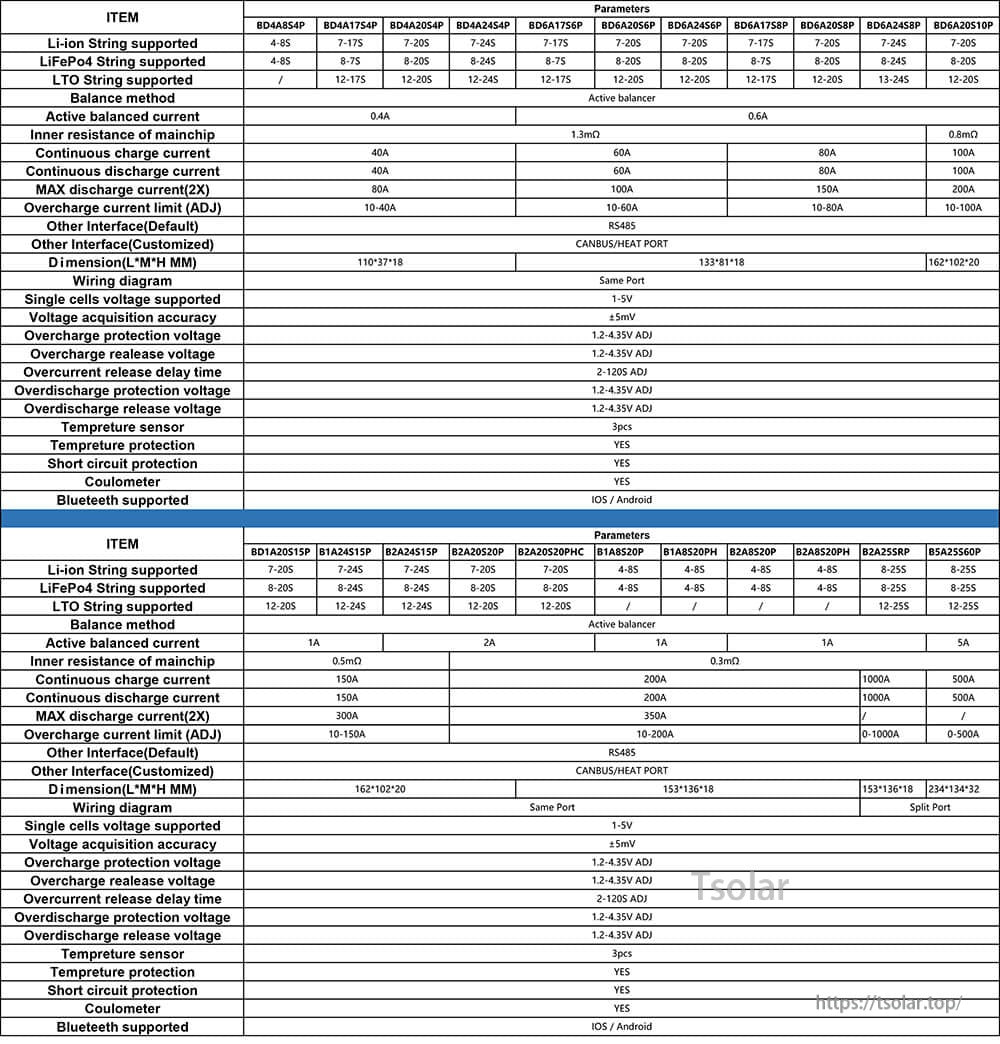
Use the parameter table to confirm the correct series count range, current rating, and communication interface for your battery pack.