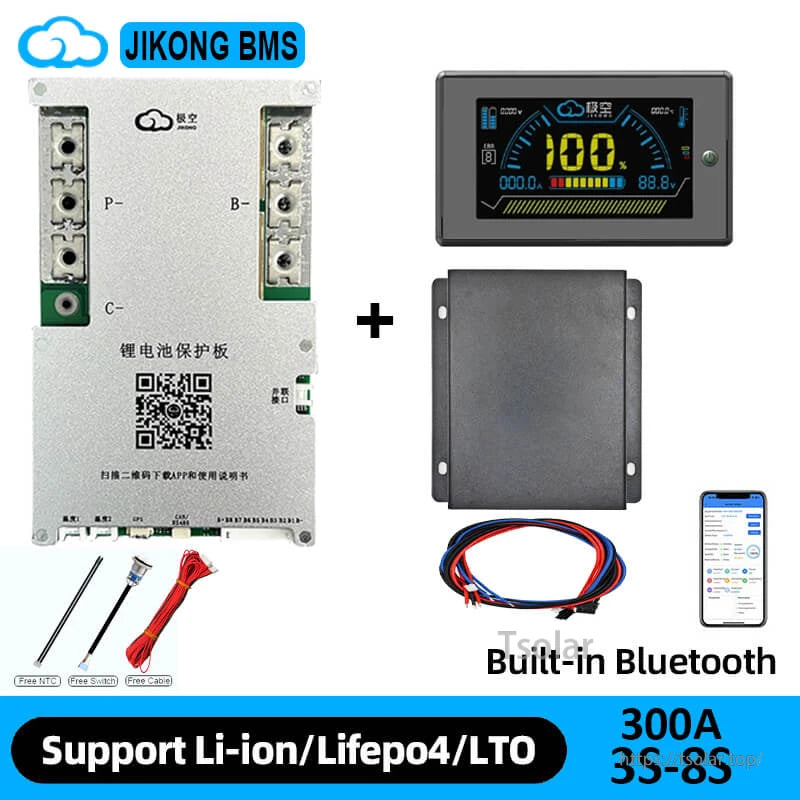
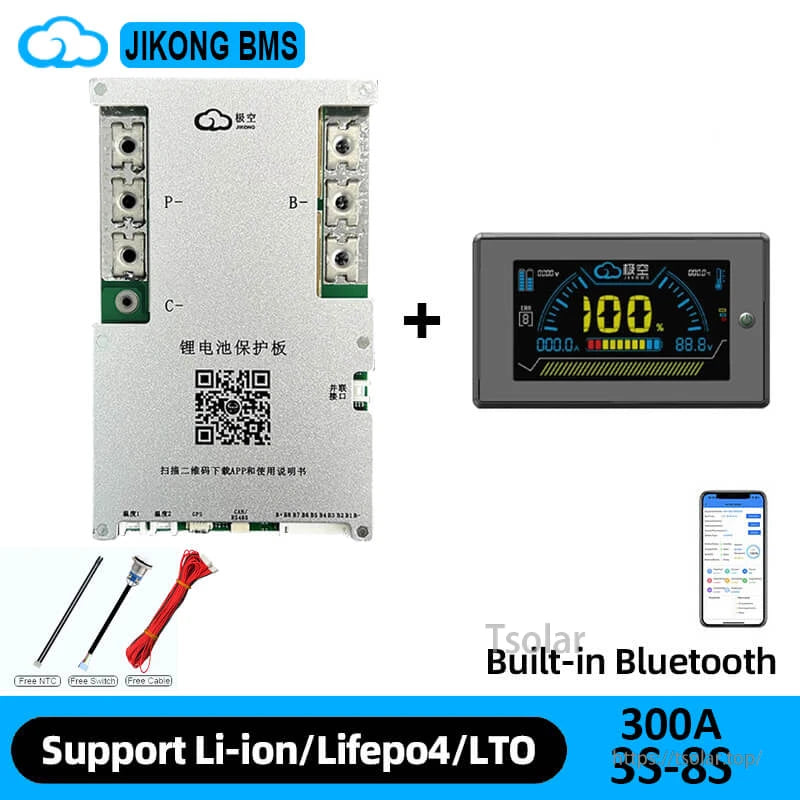
Overview
JKBMS B2A8S30P-HCR is an active-balance smart BMS for Li-ion, LiFePO4, and LTO battery packs. It supports 3S to 8S (chemistry-dependent), 2A active balancing (Full State On), 300A continuous current, built-in Bluetooth for Android/iOS monitoring, and communications via RS485 (default) with CAN Bus and heating support. The BMS uses a common-port (same port) wiring method and is self-powered by the battery pack.
Key Features
- Battery strings support: 3S-8S (Li-ion), 4S-8S (LiFePO4), 6S-8S (LTO)
- Active balancing: 2000 mA (2A), Active Balance (Full State On)
- Current capability: 300A continuous charge / 300A continuous discharge; maximum discharge current (MAX 2 min): 450A
- Cell voltage monitoring: single cell voltage detection range 0-5V; error <10 mV over full operating range; typical error value <5 mV; supports single-cell voltage dropout detection
- Total pack voltage detection: detection range 0-100V; <0.5% FSR (FSR = full scale)
- Current sensing: shunt -150A to 300A; error <0.5% FSR
- SoC & capacity estimation: SoC estimation accuracy error <8% (operating conditions); remaining capacity error range <8%; total cycle Ah cumulative value is half of the charge/discharge value
- Protections (six security protection): over charge protection, over discharge protection, over current protection, short circuit protection, ALL-IN protection (cable drop/poor contact), over temp protection
- Smart energy working mode switching (text shown): Storage Mode; Normal Working Mode (charging activates); Shutdown (below shutdown voltage); Standby Mode (standby after set time, 1-30 days can be set)
- Bluetooth operation (text shown): download the specified Bluetooth application and activate the BMS; open the Bluetooth application, find the relevant serial number, then check data
Specifications
| Model | B2A8S30P-HCR |
| Supported battery strings (Li-ion) | 3S-8S |
| Supported battery strings (LiFePO4) | 4S-8S |
| Supported battery strings (LTO) | 6S-8S |
| Wiring method / output | Same port / Common Port |
| Power supply mode | Battery pack self-powered |
| Balance method | Active Balance (Full State On) |
| Balance current | 2A (2000 mA) |
| Conductive resistance in main circuit | 0.3 mΩ |
| Continuous charge current | 300A |
| Continuous discharge current | 300A |
| Maximum discharge current (MAX 2 min) | 450A |
| Over charge protection current (adjustable) | 10-300A |
| Single cell voltage range | 1-5V |
| Single cell voltage detection range | 0-5V |
| Voltage acquisition accuracy | ±5 mV |
| Single cell voltage error | <10 mV (full operating range); typical <5 mV |
| Total voltage detection range | 0-100V |
| Total voltage detection accuracy | <0.5% FSR |
| Current sense shunt range | -150A to 300A |
| Current sensing error | <0.5% FSR |
| Over charge protection voltage | 1.2-4.35V Adjustable |
| Over charge release voltage | 1.2-4.35V Adjustable |
| Over discharge protection voltage | 1.2-4.35V Adjustable |
| Over discharge release voltage | 1.2-4.35V Adjustable |
| Over current detect delay | 2-120S Adjustable |
| Temperature detection range | -40 to 125°C |
| Quantity of temperature detection | 3 pcs |
| Operating temperature | -40 to 85°C |
| Storing temperature | -40 to 95°C |
| Operating power consumption | <5 mA (without communication) / 15 mA (485/CAN) |
| Standby power consumption | <2 mA |
| Interfaces (default) | RS485 |
| Interfaces (customized) | CANBUS / HEAT |
| Bluetooth function | Built-in; support for Android & iOS phone |
| Short circuit protection | YES |
| Temp protection | YES |
| Coulomb counter | YES |
| Size | 153*136*18mm |
Interfaces & Terminal Labels (text shown)
- High-current terminals shown: B+, B-, P-, C-
- Bottom connector labels shown: temperature line, GPS, CAN/RS485, and cell sense leads (example shown as 8+ to 1+)
- Connector/pin text shown:
- CANBUS (need customization): GND, CAN_H, CAN_L
- RS485 (by default): GND, RX, TX, VCC
- LCD (by default): K-, K+, GND, B, A, VCC
- Heat function (need customization): Heat Function
Parallel Module (text shown)
- Parallel module name shown: JK-BLMK-5A (Parallel Module)
- Wiring diagram title shown: “JKBMS Parallel Module JK-BLMK-5A Wiring Diagram”
- Parallel module terminal labels shown: B+ / DO, and B- B- P- P-
- Diagram text shown: “Through the cable and cable B connects two battery pack”, with “Cable a” and “Cable b” between Battery pack 1 and Battery pack 2
Models / Options
- B2A8S30P-HCR
- B2A8S30P-HCR + 3.2LCD
- B2A8S30P-HCR + Parallel Module
- B2A8S30P-HCR + Parallel Module + 3.2LCD
Applications
- LiFePO4 / Li-ion / LTO battery packs within supported series range (up to 8S)
- Off-grid solar energy storage, RV/van power systems, marine house batteries, backup battery packs
For pre-sales selection and wiring confirmation (RS485/CANBUS/heating/LCD/parallel options), contact support at https://tsolar.top/ or service@tsolar.top.
Notes on Other Text Visible in the Provided Images
- Some images include model labels and specification callouts for other JK BMS variants (for example: “JK-BD6A17S6P” and “JK-B2A20S20P-H-C”). These labels are separate from the B2A8S30P-HCR specifications listed above.
Details
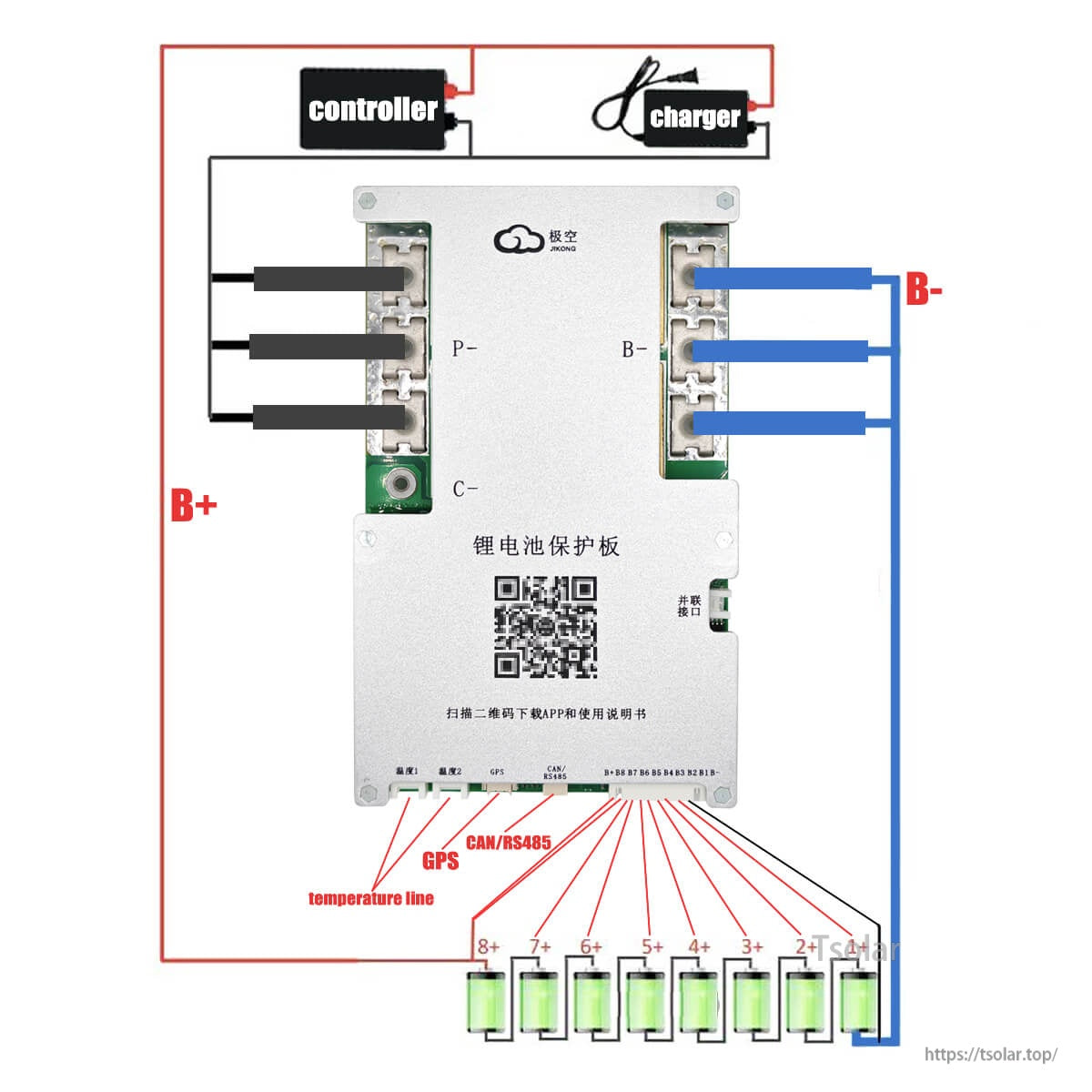
Common‑port wiring keeps charge and discharge on one port while monitoring each cell tap for accurate protection and balancing.
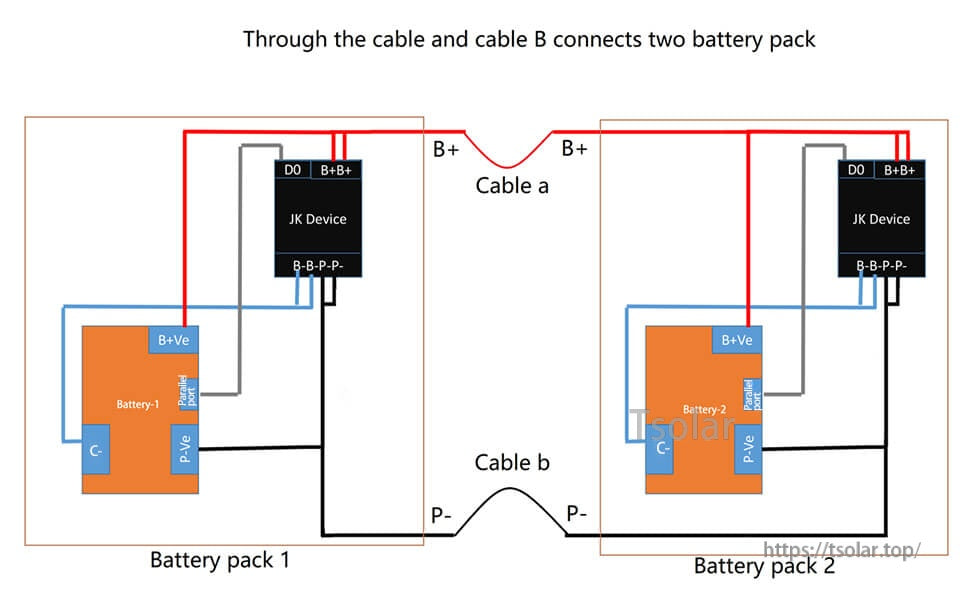
Parallel wiring guidance helps connect two battery packs safely while maintaining proper BMS control and sensing.
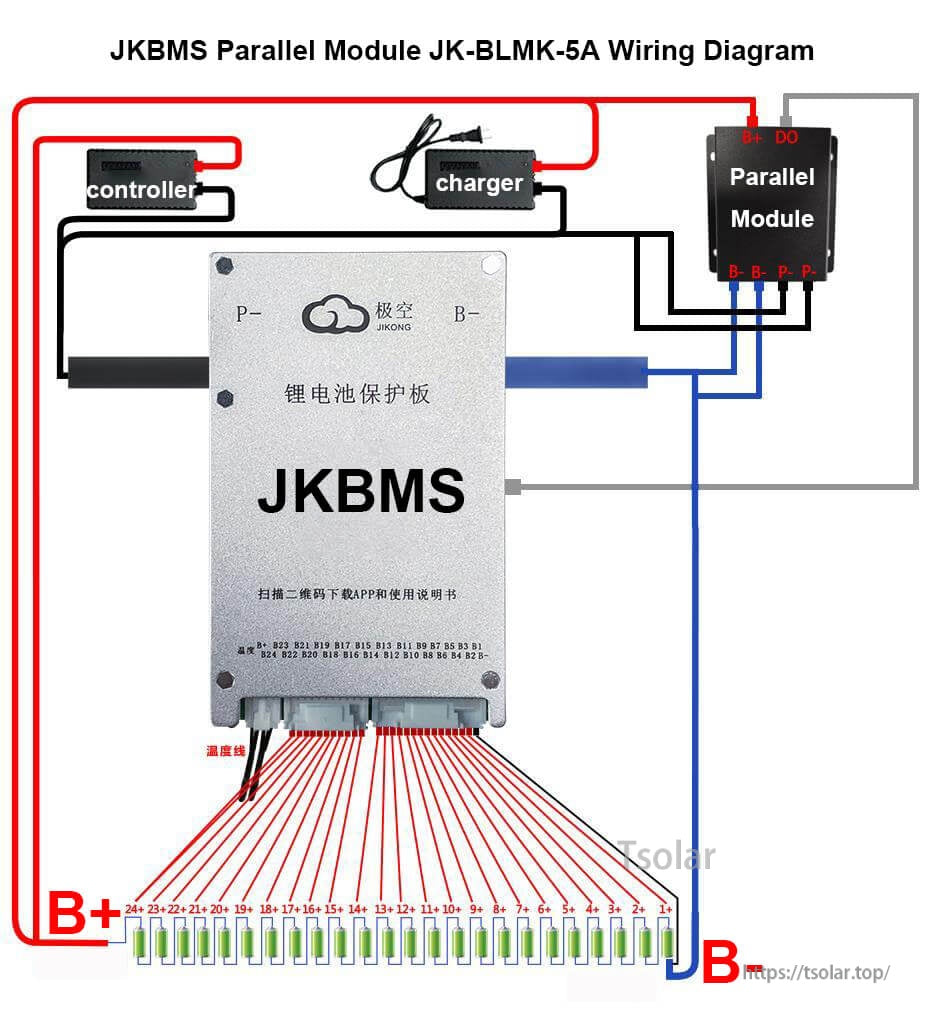
For multi-pack setups, the optional parallel module wiring layout clarifies controller, charger, and balance-lead routing.
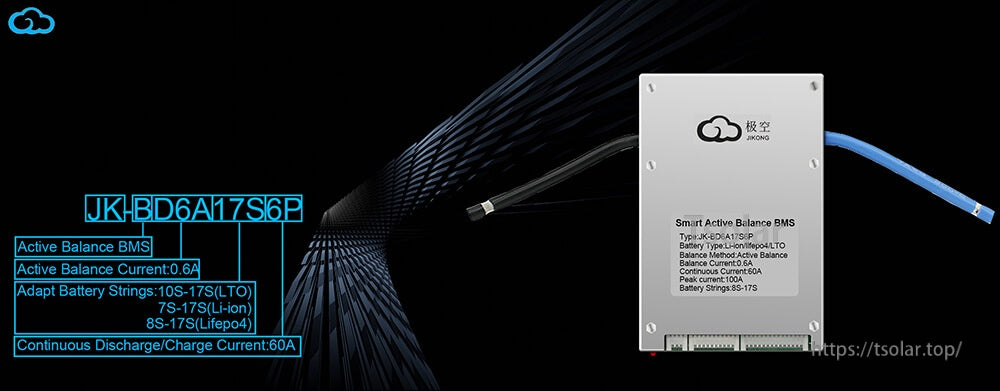
Active balancing and smart monitoring are built into the compact BMS design for lithium battery packs.
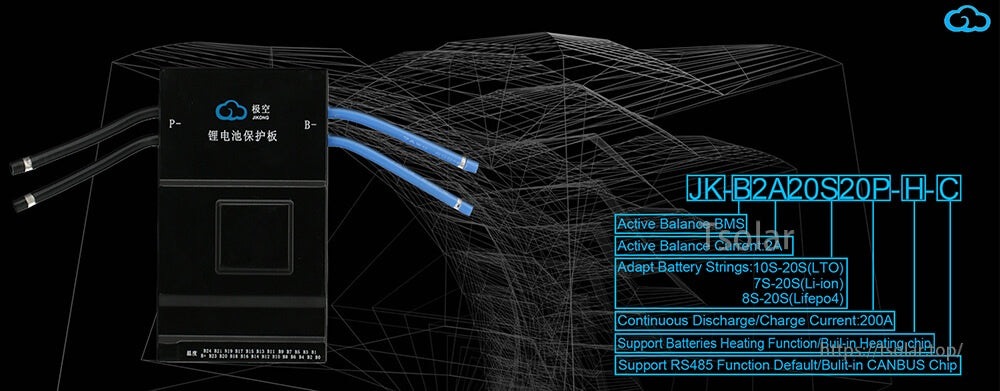
RS485 communication is supported by default, with optional CAN and heating features depending on configuration.
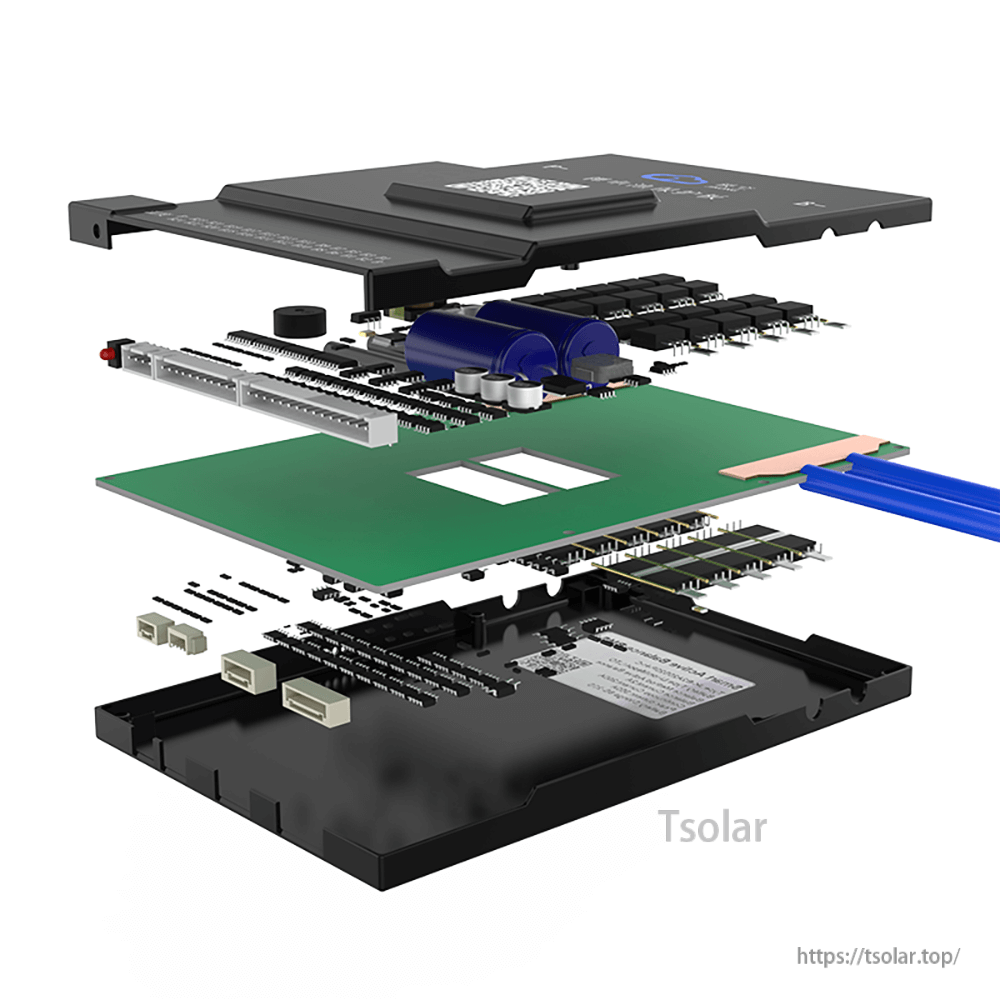
Internal board layout integrates power components, sensing circuits, and connectors in a protected enclosure.
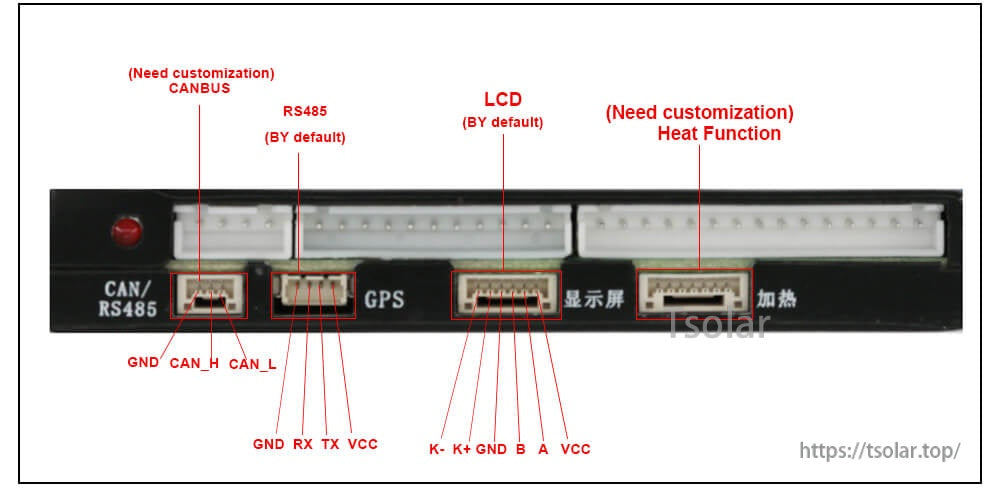
Clearly labeled headers simplify connecting CAN/RS485, GPS, and optional LCD or heating functions.
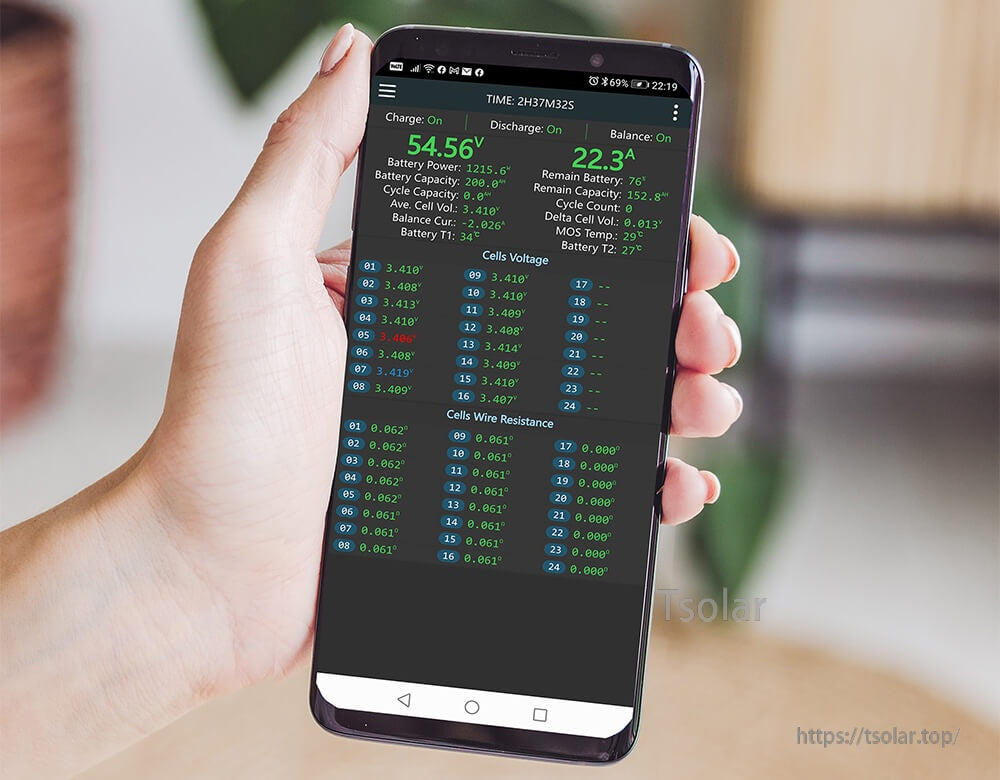
Bluetooth monitoring provides real-time pack status plus per-cell voltage and resistance data on a phone.
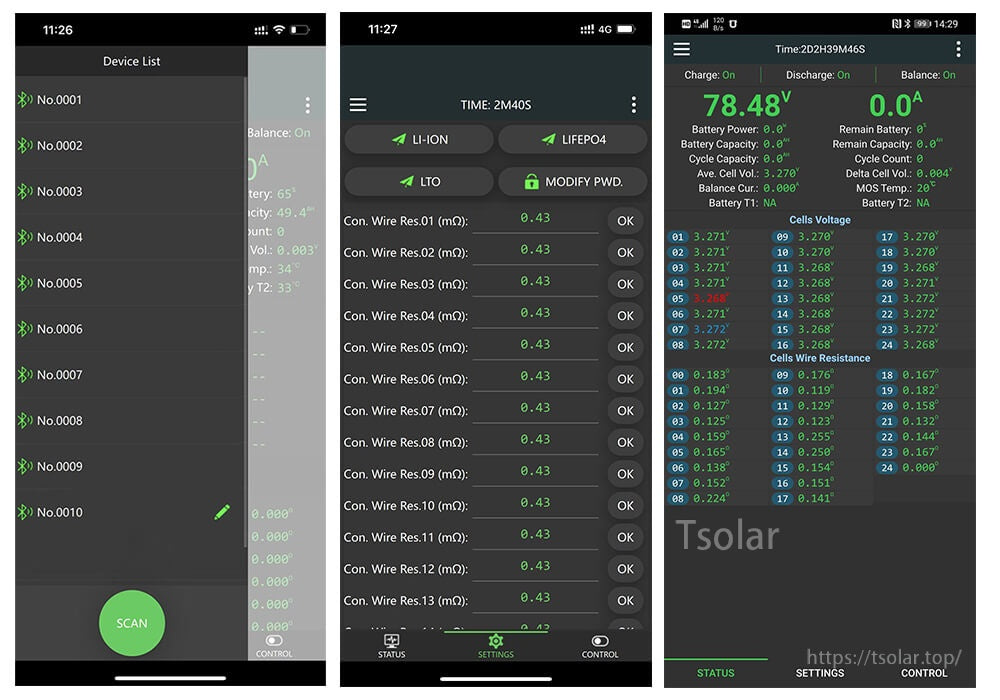
App screens cover device discovery, configuration options, and a live dashboard for quick diagnostics.
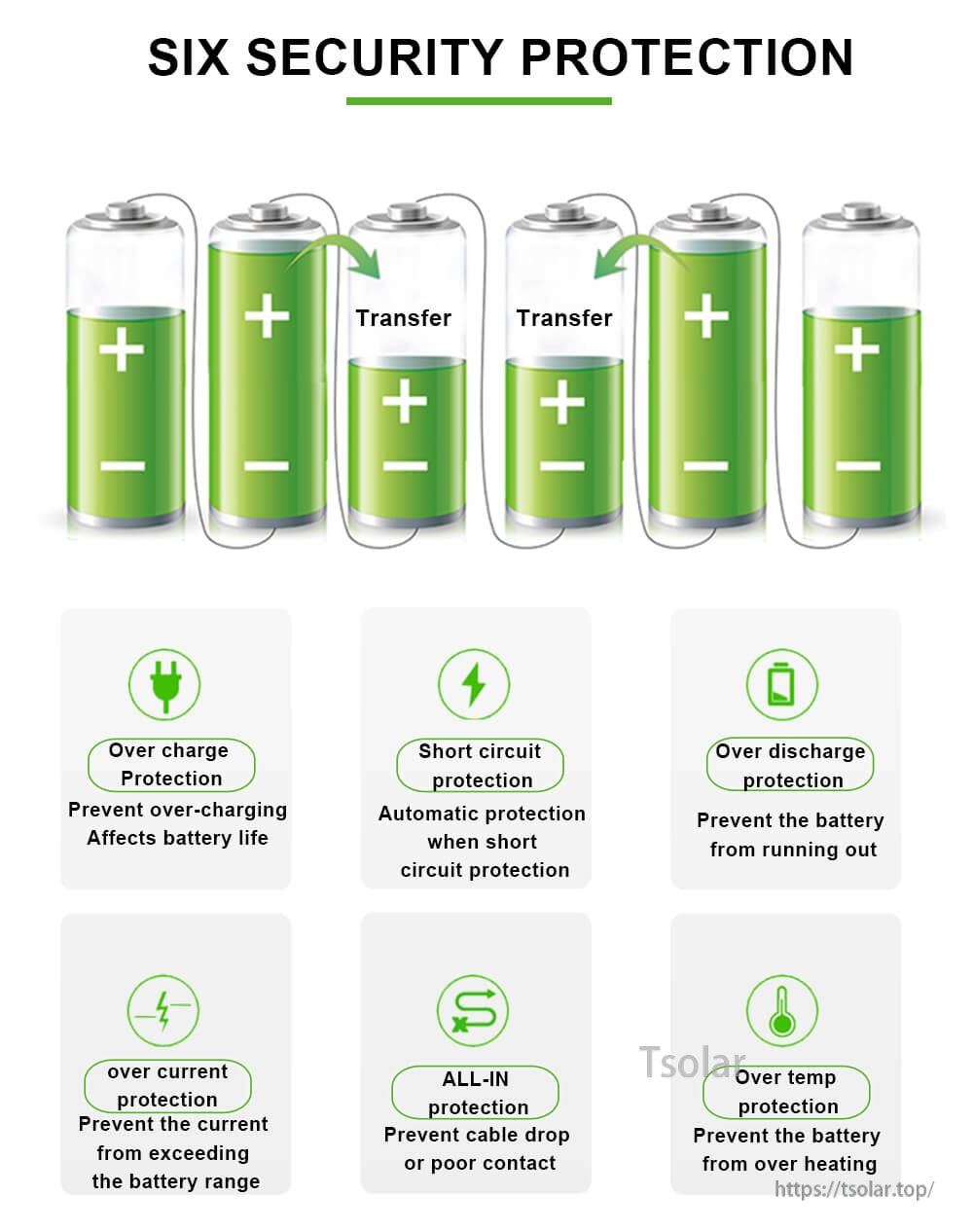
Six protection functions help safeguard the pack during charging, discharging, faults, and overheating conditions.
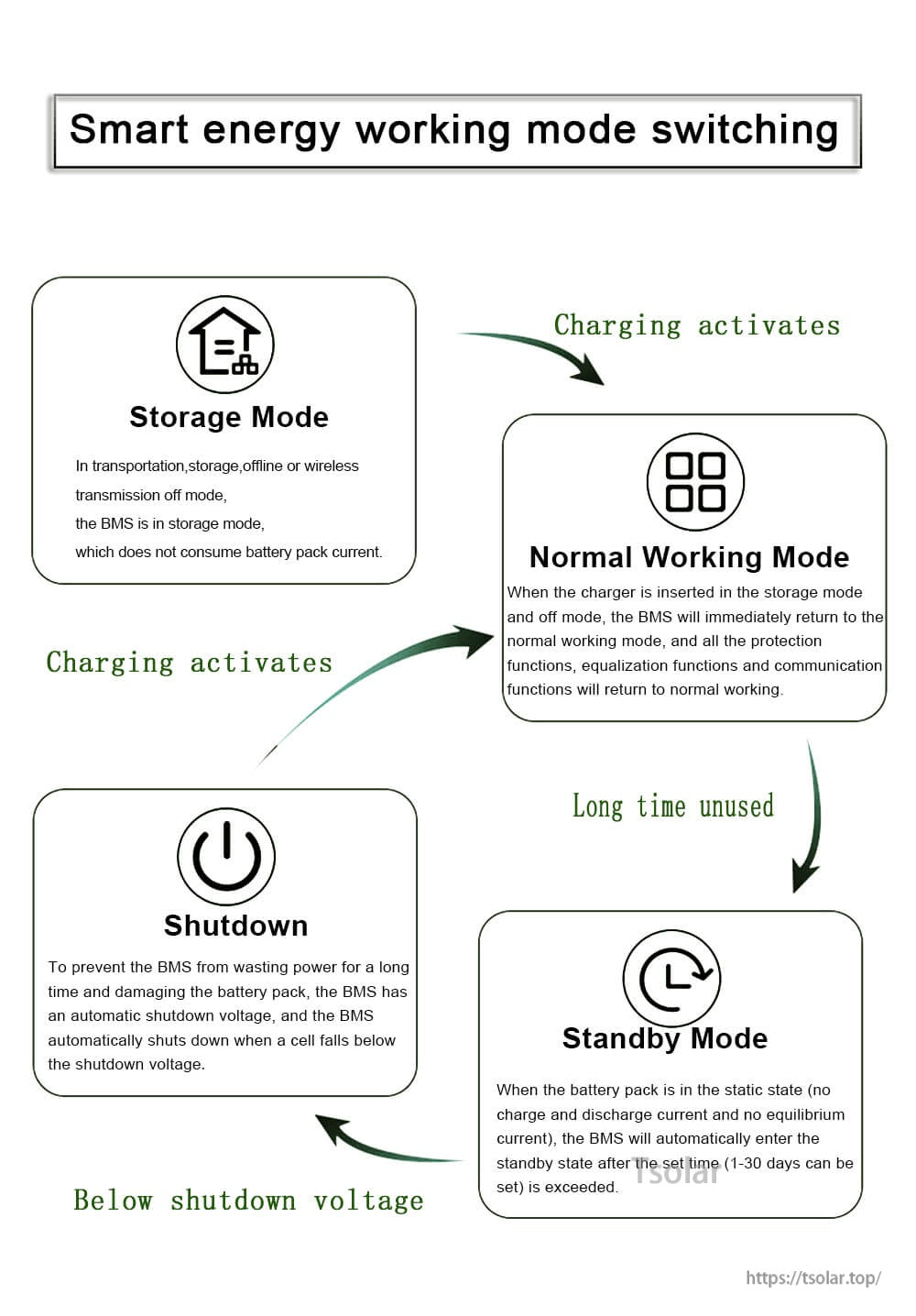
Energy modes include storage, standby, normal working, and shutdown behavior to reduce idle drain when needed.
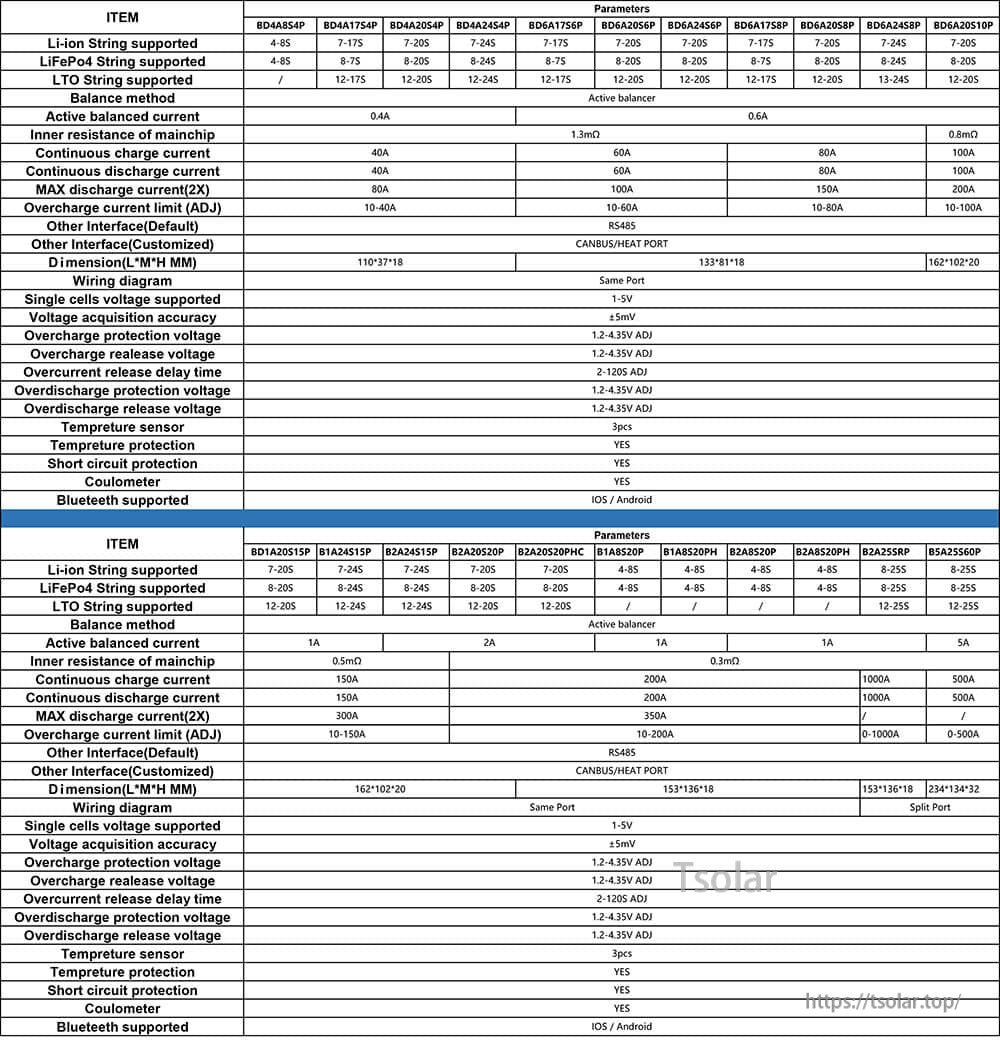
A detailed comparison table lists supported chemistries, string counts, balancing, and interface options across models.